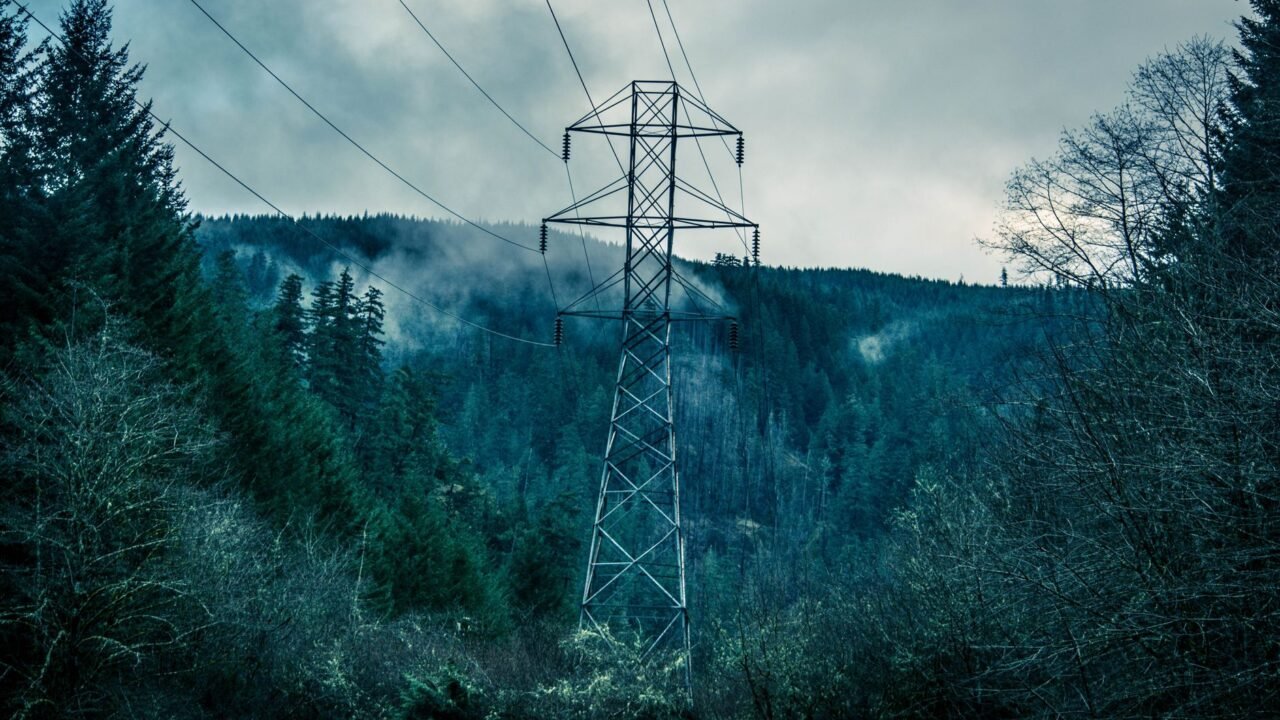
Three gigawatts of data centers simultaneously disconnected from the PJM grid this week following a power line failure near Washington, DC, causing a significant voltage spike across the region and highlighting a growing vulnerability in critical infrastructure. The incident, which saw lights flicker from Northern Virginia to Chicago, took over 10 minutes for the grid to stabilize, far longer than a typical recovery, according to data from Ting Labs. This event underscores the increasing strain that the world’s densest concentration of data centers, located in Northern Virginia, places on the electrical grid. The rapid, uncoordinated disconnection of these facilities poses a substantial challenge to grid stability, demanding urgent solutions as AI and data demands continue to escalate.
Key Developments
- A power line outage near Washington, DC, led to over 3 gigawatts of data centers abruptly disconnecting from the PJM grid.
- The simultaneous load drop caused voltage spikes across the PJM grid, impacting 67 million customers from New Jersey to Illinois and delaying grid stabilization for over 10 minutes.
- Northern Virginia, home to the world’s highest concentration of data centers, is particularly susceptible to such grid disturbances.
- Experts warn that these events are becoming more frequent and could foreshadow larger disruptions if data centers do not adopt more resilient power management solutions.
- Companies like ON.Energy are developing advanced uninterruptible power supply systems designed to allow data centers to absorb grid fluctuations and maintain a stable load.
What Happened
Earlier this week, a power line outage outside Washington, DC, triggered an unusual and prolonged disruption across the PJM Interconnection grid, which serves 67 million customers across 13 states. Typically, the grid would recover within seconds from such an event. However, this particular incident saw more than 3 gigawatts of data center load vanish almost simultaneously, according to PJM data. Specifically, approximately 3.1 gigawatts dropped off within 30 seconds, with additional loads disconnecting shortly after, leading to a peak of 3.49 gigawatts of excess electricity on the grid.
The rapid removal of such a large load—representing about 3% of PJM’s total demand at the time—caused voltage across the vast PJM network to spike dramatically, extending from Northern Virginia to Chicago. This imbalance resulted in widespread flickering lights and an 11-minute delay before the grid could fully stabilize. Data centers in Northern Virginia, sensing the initial voltage dip, automatically switched to their backup power systems, inadvertently exacerbating the problem by removing their demand from the grid in a highly uncoordinated fashion.
Why It Matters
The recent grid incident serves as a stark warning about the growing interdependence and potential fragility of the relationship between burgeoning AI data centers and critical electrical infrastructure. The electrical grid operates on a delicate balance of supply and demand, and the sudden, uncoordinated disconnection of massive loads like data centers can trigger cascading effects, leading to voltage instability and potential blackouts. This event demonstrates that the sheer scale and rapid response mechanisms of modern data centers can transform a minor grid disturbance into a significant regional challenge.
Ricardo de Azevedo, CTO at ON.Energy, aptly described the situation as “the canary in the coal mine,” indicating that such events are increasing in frequency. The incident echoes a similar, though smaller, event two years prior on the same PJM grid, where 60 data centers simultaneously disconnected, pulling 1.5 gigawatts of load. As data center demand, particularly for AI workloads, continues its exponential growth—projected to account for 24% of PJM’s load by 2040, up from 6% in 2024—the need for more sophisticated grid-aware power management solutions becomes paramount to prevent future, potentially more severe, disruptions.
Industry Impact
The repercussions of this incident extend across the technology and energy sectors, highlighting an urgent need for innovation in data center power management. The current default behavior of data centers to immediately disconnect from the grid upon sensing fluctuations, while individually logical for facility protection, creates a collective instability problem for the wider electrical network. This necessitates a shift in how data centers are designed and operated, moving towards systems that can “ride through” disruptions rather than amplify them.
Companies like ON.Energy are at the forefront of this shift, developing solutions such as campus-wide uninterruptible power supplies (UPS) that integrate batteries and sophisticated power conversion equipment. These systems allow data centers to present a consistent, well-behaved load to the grid, absorbing fluctuations by charging or discharging batteries, and even following grid commands within milliseconds. This approach not only protects the data center but also enhances overall grid stability. Regulatory bodies are also taking notice; ERCOT, for example, is reportedly moving to mandate “ride through” capabilities for large loads like data centers, signaling a broader industry trend towards greater grid responsibility.
Analysis
The recent power line incident underscores a critical, emerging challenge at the intersection of AI infrastructure and national energy grids. The rapid proliferation of data centers, particularly those supporting energy-intensive AI training and inference, is creating unprecedented demands on electrical networks designed for more predictable loads. The current default operational protocol for many data centers—to instantaneously switch to backup power when grid anomalies are detected—is a self-preservation mechanism that, when scaled across hundreds of facilities, transforms into a systemic vulnerability for the grid.
The issue is not merely one of capacity, but of dynamic stability. The electrical grid requires a near-perfect balance between supply and demand to maintain stable voltage and frequency. When 3 gigawatts of load disappear in seconds, it creates a massive surplus of power, causing voltage spikes that can trigger further failsafes and potentially lead to widespread outages. This highlights a fundamental design flaw in the current symbiotic relationship between data centers and the grid. Future-proofing our energy infrastructure against the demands of the AI era will require a collaborative effort between grid operators, data center developers, and technology providers to implement intelligent, grid-responsive power solutions.
Future Implications
Near-term (3-6 months): Grid operators, particularly PJM and others with high data center concentrations, will likely accelerate discussions and potentially introduce new requirements for data center grid interaction, focusing on “ride-through” capabilities and more coordinated disconnection protocols. Data center developers will begin exploring and piloting advanced power management systems to meet these evolving expectations.
Medium-term (1-2 years): We can expect to see increased adoption of intelligent UPS systems and energy storage solutions within data center campuses, moving beyond traditional backup generators. Regulatory frameworks may solidify, mandating specific grid-friendly behaviors for large-scale energy consumers like AI data centers. This could also spur innovation in distributed energy resources and microgrids for data centers.
Long-term (3-5 years): Data centers may evolve into active participants in grid management, offering demand response services and contributing to grid stability rather than solely consuming power. The geographic distribution of new data center builds could also be influenced by grid resilience, leading to more diversified locations or innovative grid integration strategies in existing hubs. Failure to address these challenges could lead to more frequent and severe grid disruptions, impacting economic activity and public services.
Actionable Insights
- Data center operators should proactively evaluate their power infrastructure for “ride-through” capabilities and grid-friendly features.
- Engage with local grid operators (e.g., PJM, ERCOT) to understand evolving requirements for large energy consumers.
- Investigate advanced energy storage and power conversion technologies that can absorb grid fluctuations and present a stable load.
- Consider campus-level power management solutions that can orchestrate power flow for entire data center facilities.
- Explore opportunities for demand response programs that allow data centers to dynamically adjust power consumption in response to grid signals.
What caused the recent grid instability near Washington, DC?
A fallen power line triggered a chain reaction where over 3 gigawatts of data centers simultaneously disconnected from the PJM grid. This sudden drop in demand caused a significant voltage spike across the region, leading to grid instability.
Why did data centers disconnecting cause a problem?
Electrical grids require a near-perfect balance between electricity supply and demand. When data centers disconnected, they removed a massive load, creating a large surplus of power. This imbalance caused voltage to spike, which can trigger further failsafes and disrupt the grid.
How large was the impact of this event?
The event caused voltage spikes from Northern Virginia to Chicago, affecting the PJM grid which serves 67 million customers. It took over 10 minutes for the grid to stabilize, and lights flickered across the region. At its peak, the grid had an extra 3.49 gigawatts of electricity.
What solutions are being proposed for this issue?
Experts suggest data centers need to be built to more elegantly handle power disruptions, either by sequentially disconnecting/reconnecting or by absorbing fluctuations. Companies like ON.Energy are developing uninterruptible power supply systems that use batteries to hide data center load variability from the grid, allowing them to ride through events.
What is the long-term outlook for data centers and the grid?
Data center demand is projected to grow significantly, potentially accounting for 24% of PJM’s load by 2040. Without addressing the current grid integration issues, such events are expected to become more frequent and severe. Grid managers like ERCOT are beginning to require large loads, including data centers, to “ride through” disruptions.
Key Takeaways
- A single power line failure exposed the vulnerability of the PJM grid to the rapid, uncoordinated disconnection of large data center loads.
- Over 3 gigawatts of data centers simultaneously dropped off the grid, causing significant voltage spikes and delaying grid recovery for over 10 minutes.
- Northern Virginia’s high concentration of data centers makes it a critical hotspot for potential grid instability.
- The incident highlights the urgent need for data centers to adopt “ride-through” capabilities and more sophisticated grid-aware power management solutions.
- As AI demand grows, data centers are projected to become a much larger percentage of grid load, making proactive solutions essential for future energy stability.