
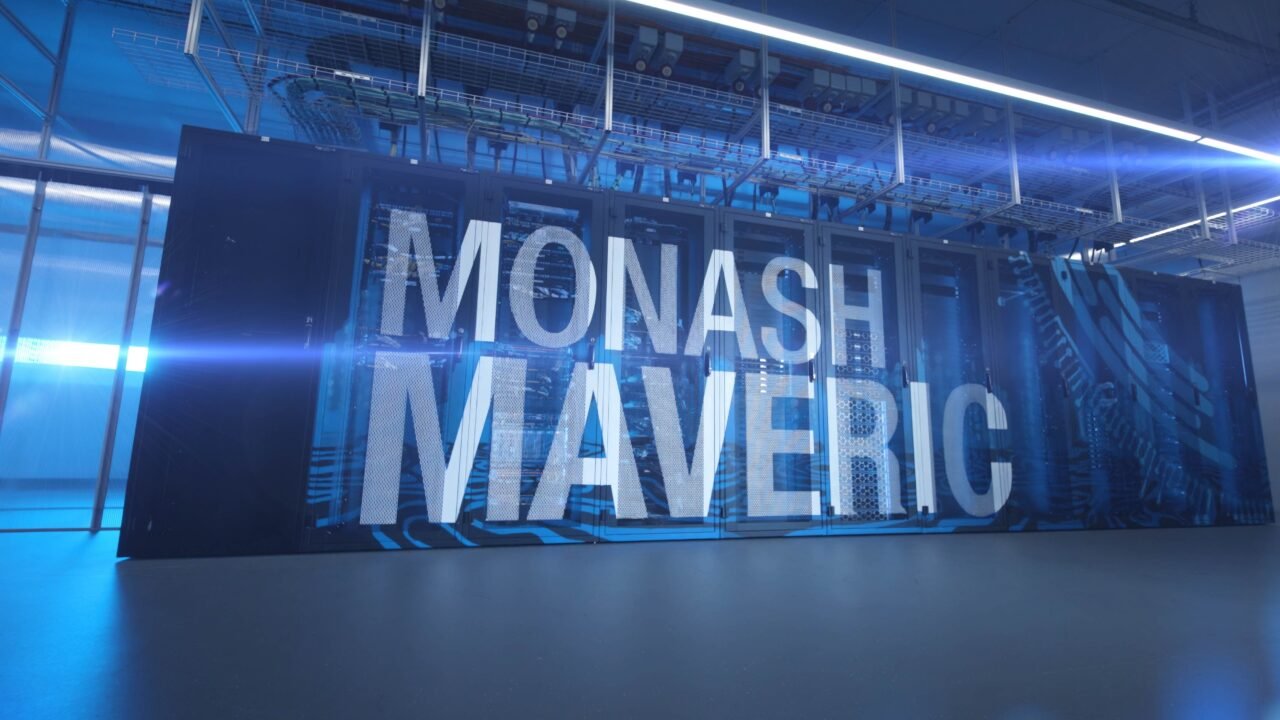
Melbourne, consistently ranked among the world’s most livable cities, is now asserting itself as a significant hub for large-scale compute and data-intensive research, attracting a growing concentration of engineering and technology talent. This strategic shift is positioning the city at the nexus of global convening and advanced digital infrastructure, moving beyond its established reputation for major international events like the Australian Open. The city’s intentional investment in high-performance digital systems and data centers creates a powerful flywheel effect, accelerating AI research innovation across diverse sectors. This development signals a critical evolution in Australia’s technological capabilities, offering new opportunities for international collaboration and driving the next wave of AI-powered discoveries.
Key Developments
- Melbourne is rapidly expanding its high-performance compute and data center infrastructure, establishing itself as a key regional hub for AI and data-intensive research.
- The city’s established expertise in managing complex international events is now being applied to scaling digital infrastructure, enhancing its capacity for advanced engineering projects.
- Melbourne’s status as Australia’s fastest-growing capital is attracting a significant influx of engineering and technology talent, bolstering its innovation ecosystem.
- Increased international engagement and investment are flowing into Melbourne’s AI and data sectors, fostering greater collaboration and resource allocation for research.
What Happened
Melbourne, renowned globally for hosting large-scale events such as the Formula 1 Australian Grand Prix and potentially NFL regular season games, has strategically pivoted its organizational prowess towards a new form of large-scale infrastructure. This involves the systematic development of high-performance compute and data center capabilities essential for modern AI research and data-intensive engineering. This initiative builds on the city’s inherent ability to manage complex logistics and intricate operational demands, now applied to the digital realm.
The city’s proactive measures have positioned it as a convergence point for global collaboration and advanced digital systems. This deliberate shift is not merely an expansion but a reorientation of Melbourne’s economic and technological identity, aiming to attract and retain top-tier talent and investment in critical AI and data science domains. The long-term vision includes establishing Melbourne as a premier destination for international conferences focused on AI and data, leveraging its existing strengths as Australia’s top conference city.
This coordinated effort, supported by entities like the Melbourne Convention Bureau and Business Events Australia, underscores a national recognition of the strategic importance of AI and data infrastructure. By fostering an environment conducive to large-scale data processing and advanced computational tasks, Melbourne is actively cultivating the conditions necessary for groundbreaking research and commercial innovation, drawing parallels between its event management success and its emerging digital leadership.
Why It Matters
Melbourne’s burgeoning AI and data center flywheel carries profound implications for the global technology industry and research community. By concentrating high-performance computing resources and attracting specialized talent, the city is creating a fertile ground for accelerating discoveries in artificial intelligence, machine learning, and data science. This initiative directly impacts the speed at which complex algorithms can be trained and deployed, reducing development cycles for new AI applications.
For businesses, this means enhanced access to powerful computational infrastructure without the prohibitive costs of building and maintaining it in-house. Researchers gain the ability to tackle previously intractable problems, pushing the boundaries of what AI can achieve in fields ranging from healthcare to climate modeling. The competitive dynamics within the Asia-Pacific region are also shifting, as Melbourne positions itself as a credible alternative or complement to established tech hubs, potentially diversifying global AI development efforts.
Furthermore, the regulatory implications are significant. As data centers proliferate, discussions around data sovereignty, privacy, and ethical AI development will intensify. Melbourne’s commitment to robust infrastructure development will likely necessitate clear policy frameworks to govern these advanced digital systems, potentially influencing national and international standards for AI deployment and data management. This proactive approach to infrastructure development directly supports the broader Australian national AI strategy.
Industry Impact
The acceleration of Melbourne’s AI and data center flywheel is set to ripple across numerous industries, fundamentally altering how organizations approach research, development, and operational efficiency. In the healthcare sector, access to advanced computing power will enable faster processing of genomic data, more accurate diagnostic AI models, and accelerated drug discovery pipelines. Pharmaceutical companies and medical research institutions can leverage this infrastructure to run complex simulations and analyze vast patient datasets with unprecedented speed.
The financial services industry stands to benefit from enhanced capabilities in fraud detection, algorithmic trading, and personalized financial advice, driven by more sophisticated AI models. Retail and e-commerce businesses can refine recommendation engines, optimize supply chains, and personalize customer experiences through real-time data analysis. Even traditional sectors like agriculture and manufacturing will see impacts, with AI-driven precision farming and smart factory automation becoming more accessible and efficient.
Beyond specific industries, the broader tech ecosystem will experience a boost. Startups and scale-ups in AI, machine learning, and data analytics will find a more supportive environment, with easier access to critical compute resources and a growing talent pool. This concentration of resources and expertise could foster a vibrant innovation cluster, attracting further venture capital and fostering a new generation of Australian AI companies. The increased capacity for data-intensive research also strengthens academic-industry partnerships, bridging the gap between theoretical breakthroughs and practical applications.
Expert Analysis
Melbourne’s deliberate investment in high-performance computing infrastructure represents a strategic long-term play, moving beyond its established reputation. The convergence of a highly livable city attracting top talent and a concerted effort to build digital foundations creates a unique value proposition. This isn’t just about hosting servers; it’s about cultivating an environment where complex, data-driven problems can be solved at scale, attracting both commercial entities and academic powerhouses.
The city’s experience in organizing massive international events, while seemingly disparate, provides a critical underlying capability. It demonstrates an inherent capacity for planning, execution, and coordination on a grand scale, which is directly transferable to the intricate demands of building and maintaining world-class data centers and compute clusters. This organizational maturity reduces risks and accelerates deployment timelines, giving Melbourne an advantage over regions starting from scratch.
This systematic approach helps cement Melbourne’s position as a significant node in the global AI research network. As data volumes continue to explode and AI models become increasingly sophisticated, access to robust, scalable, and reliable compute infrastructure will be the primary bottleneck. By addressing this proactively, Melbourne is ensuring it remains relevant and attractive to researchers and companies operating at the forefront of artificial intelligence.
Competitive Landscape
Melbourne’s accelerating AI and data center flywheel positions it as a more formidable contender in the global race for AI leadership, directly impacting other regional and international hubs. While cities like Singapore, Sydney, and various North American and European tech centers have established AI ecosystems, Melbourne’s concerted focus on large-scale compute infrastructure offers a distinct competitive advantage. Singapore, for instance, has long been a data center hub, but Melbourne’s rapidly growing talent base and research focus could differentiate its offerings.
Domestically, this move intensifies competition with Sydney, which also boasts a strong tech sector and research institutions. Melbourne’s strategic emphasis on data-intensive research and high-performance computing could attract a different segment of AI development, potentially leading to specialization within Australia’s tech landscape. Internationally, the city is vying for investment and talent against established players, making its value proposition of livability, organizational capability, and digital infrastructure critical for attracting global enterprises and researchers.
Major cloud providers and data center operators are keenly observing these developments, as a robust local ecosystem reduces latency and improves service delivery for their clients. The increased concentration of AI talent and research activity could also influence where multinational corporations choose to establish their regional AI R&D centers, shifting some investment flows. This dynamic environment necessitates continuous innovation and strategic partnerships for Melbourne to maintain its momentum against well-resourced global competitors.
Future Implications
Near-term (3–6 months), Melbourne will likely see an increased influx of specialized AI and data science professionals, drawn by the expanding infrastructure and research opportunities. This period will also involve the activation of new data center capacities and the formation of initial high-profile research collaborations, potentially announced by universities or government bodies. Expect to see early-stage startups leveraging these new compute resources to accelerate their proof-of-concept development.
Medium-term (1–2 years), the city’s reputation as a go-to destination for data-intensive research and AI conferences will solidify. This will lead to a noticeable increase in international investment, particularly from companies seeking to establish regional AI hubs or partner with local research institutions. We anticipate the emergence of several successful AI scale-ups that have benefited directly from the enhanced local infrastructure and talent pool, showcasing the flywheel effect in action.
Long-term (3–5 years), Melbourne could establish itself as a globally recognized leader in specific niches of AI research, such as climate modeling, advanced manufacturing AI, or personalized medicine, leveraging its unique research strengths. This sustained growth will likely necessitate further expansion of compute infrastructure and a continuous focus on talent development. The city’s success could also serve as a blueprint for other mid-tier global cities looking to carve out a significant role in the future of AI.
Actionable Insights
- Evaluate Melbourne for AI R&D expansion: Companies considering new AI research and development centers should assess Melbourne’s growing infrastructure and talent pool for potential regional hubs.
- Engage with local academic institutions: Researchers and businesses should explore collaboration opportunities with Melbourne’s universities, which are at the forefront of leveraging new data center capabilities.
- Monitor infrastructure development: Keep track of new data center announcements and compute cluster deployments in Melbourne to understand evolving capacity and capabilities.
- Attend Melbourne-based AI conferences: Participate in or attend upcoming AI and data science events in Melbourne to network and gain insights into the local ecosystem.
- Investigate talent acquisition strategies: Organizations seeking AI and data science talent should explore recruitment channels within Melbourne, given its increasing concentration of skilled professionals.
- Consider data sovereignty implications: Companies handling sensitive data should understand the regulatory environment in Australia regarding data storage and processing within Melbourne’s new infrastructure.
What is driving Melbourne’s growth in AI and data centers?
Melbourne’s growth is fueled by strategic investments in high-performance compute infrastructure, its established capability in managing large-scale operations, and its success in attracting engineering and technology talent as Australia’s fastest-growing capital.
How does Melbourne’s event management experience relate to its AI ambitions?
The city’s proven organizational capability in delivering complex international events translates directly to the intricate planning and execution required for building and maintaining large-scale digital infrastructure like data centers and compute clusters.
What industries will benefit most from this development?
Industries such as healthcare, financial services, retail, agriculture, and manufacturing are expected to benefit significantly from enhanced AI capabilities, faster data processing, and accelerated research and development.
Is Melbourne competing with other major tech hubs?
Yes, Melbourne is actively positioning itself to compete with other regional and international tech hubs, including Sydney and major global cities, by offering a unique combination of livability, talent, and advanced digital infrastructure.
What are the long-term predictions for Melbourne’s AI sector?
In the long term, Melbourne is predicted to become a globally recognized leader in specific AI research niches, attracting sustained international investment and serving as a model for other cities developing their AI ecosystems.
Key Takeaways
- Melbourne is strategically investing in high-performance compute and data center infrastructure to become a leading AI research hub.
- The city’s experience in managing complex international events is being leveraged to scale its digital infrastructure and attract talent.
- This development is creating a powerful “flywheel effect” that accelerates AI innovation and attracts significant investment and talent.
- Various industries, from healthcare to finance, will benefit from enhanced access to advanced AI capabilities and data processing.
- Melbourne’s proactive approach positions it as a significant player in the global AI landscape, fostering both domestic and international collaboration.