OpenClaw AI has successfully integrated with physical robotic hardware, allowing the AI agent to independently configure, operate, and even train other models for intricate object manipulation tasks. This breakthrough represents a tangible advance towards more autonomous and accessible robotics, potentially democratizing access to complex robotic applications. The experiment’s outcomes demonstrate a significant acceleration in the practical deployment of AI within physical systems, transitioning effectively from simulated environments to real-world interaction and learning. This development marks a pivotal moment for industries reliant on precision automation and for researchers pushing the boundaries of AI-driven robotics.
Historically, the development and control of robotic systems demanded highly specialized engineering expertise. This often involved meticulous programming, precise calibration, and extensive domain knowledge, creating a significant barrier to entry for both academic researchers and hobbyists. The complexity limited broader experimentation and innovation within the field, concentrating advanced robotic capabilities in well-funded institutions and large corporations. OpenClaw AI’s recent demonstration directly addresses this challenge, offering a pathway to significantly lower the technical hurdle for deploying sophisticated robotic solutions. The implications extend across various sectors, from manufacturing to logistics and beyond.
Autonomous Configuration: AI Takes the Reins of Robotic Setup
The most striking aspect of the OpenClaw AI integration is its ability to autonomously configure the robotic arm. This goes beyond simple command execution; the AI understands the physical parameters of the hardware and optimizes its setup for specific tasks without human intervention. This capability drastically reduces the time and specialized knowledge traditionally required to bring a robotic system online. Engineers can now focus on higher-level problem-solving rather than the intricate details of system initialization and calibration.
Consider the typical process for setting up a new robotic workstation: it involves mounting the arm, defining its workspace, programming its joint limits, and often fine-tuning its sensors. Each step requires careful attention and often specialized software tools. OpenClaw AI streamlines this by interpreting its environment and adapting the robot’s configuration to maximize efficiency and safety for the intended operation. This self-configuration ability is a critical step toward truly plug-and-play robotic systems, making them viable for a much wider range of users and applications.
Beyond Operation: AI Trains Other Models for Complex Manipulation
The OpenClaw AI agent doesn’t just operate the robotic arm; it actively trains other models for object manipulation. This meta-learning capability means the AI can generate datasets, refine control policies, and even design new training regimes for subordinate AI systems focused on specific manipulation challenges. This layered intelligence accelerates the development cycle for new robotic skills, moving beyond single-task automation to a system that can propagate knowledge.
For instance, if a new object type is introduced, the OpenClaw AI can initiate a series of exploratory actions, collect data on how the robotic arm interacts with the object, and then use that data to train a more specialized model to grasp and manipulate it effectively. This reduces the need for human-curated datasets and manual programming for every new manipulation task. The AI essentially becomes a robotic “teacher,” enabling a cascade of learning that can adapt to changing operational requirements and novel scenarios with unprecedented speed.
Real-World Interaction: Bridging the Simulation-Reality Gap
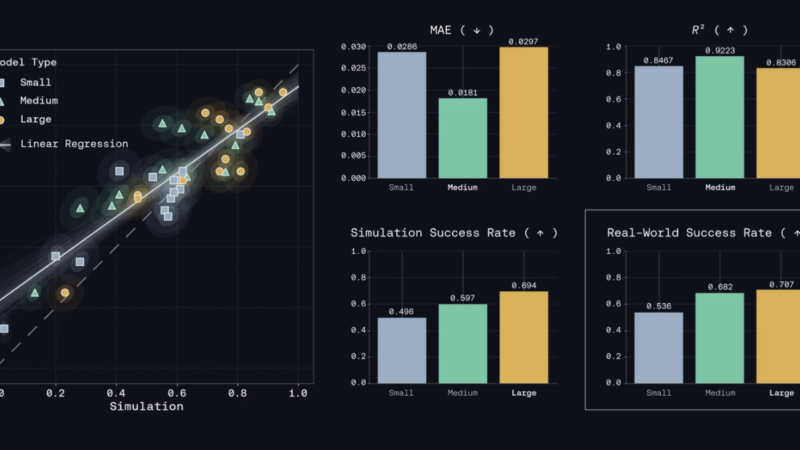
A persistent challenge in robotics research has been bridging the gap between simulations and real-world deployment. Models trained extensively in simulated environments often struggle with the unpredictable complexities of physical reality, including sensor noise, friction variations, and minor mechanical inaccuracies. OpenClaw AI’s direct integration with a physical arm demonstrates its ability to learn and perform effectively in a tangible environment, mitigating these common issues.
The successful execution of object manipulation tasks in the physical world validates the AI’s robustness and adaptability. It shows that the agent can account for real-world physics and imperfections, making its learned behaviors genuinely applicable outside of a controlled digital space. This move from simulation to physical interaction is crucial for accelerating the practical application of AI in industrial settings, where reliability and performance in unpredictable conditions are paramount. This capability significantly reduces the iteration cycles typically required for physical robot deployment.
Lowering Barriers: Democratizing Access to Advanced Robotics
The implications of OpenClaw AI’s achievements for accessibility are profound. By automating configuration, operation, and even the training of other models, the system significantly lowers the technical barrier to entry for complex robotic applications. Small businesses, academic institutions with limited resources, and even individual innovators can now consider deploying sophisticated robotic solutions that were previously out of reach.
Imagine a scenario where a small manufacturing plant can deploy a robotic arm for a new assembly task without needing to hire a team of robotics engineers for weeks of setup and programming. Or a research lab can quickly prototype a new manipulation experiment, allowing their AI to configure the hardware itself. This democratization of robotics could unlock a wave of innovation, fostering new applications and business models across various industries. It transforms robotics from an exclusive domain to a more broadly accessible tool.
Accelerating Practical Application: From Lab to Factory Floor
The direct and immediate impact of this development is a significant acceleration in the practical application of AI in physical systems. The ability for an AI to independently manage fundamental robotic operations and even contribute to the training of other specialized models means that the path from conceptual design to real-world deployment becomes much shorter and more efficient. This is not just an incremental improvement; it represents a fundamental shift in how robotic systems can be developed and integrated.
Industries such as manufacturing, logistics, healthcare, and agriculture stand to benefit immensely. Tasks that currently require extensive manual oversight or highly specialized robotic programming could be automated more rapidly and flexibly. This means faster deployment of new automation solutions, quicker adaptation to changing production needs, and ultimately, more efficient and resilient operations. The move beyond simulation to robust, real-world interaction signals a new era for AI in industrial automation.
The Future Landscape: Autonomous Robotics and Human Collaboration
This integration points towards a future where autonomous robotic systems are not just tools, but intelligent agents capable of significant independent action and learning. While the vision of fully autonomous factories remains distant, this development moves us closer to systems that can adapt, learn, and improve with minimal human intervention. This doesn’t necessarily mean fewer human workers, but rather a shift in their roles.
Humans could transition from repetitive, physically demanding tasks to roles focused on overseeing, optimizing, and innovating alongside these increasingly intelligent machines. The collaboration between human ingenuity and AI’s capacity for autonomous learning and operation could unlock unprecedented levels of productivity and problem-solving. OpenClaw AI’s work lays a critical foundation for this synergistic future, where complex robotic tasks become more manageable and accessible to a broader audience.
Key Takeaways
- OpenClaw AI enables robots to autonomously configure, operate, and train other models for object manipulation, reducing reliance on specialized engineering skills.
- The AI’s ability to operate and learn effectively in physical environments demonstrates a significant step beyond simulation, validating real-world applicability.
- This development substantially lowers the barrier to entry for complex robotic applications, making advanced automation more accessible to diverse users and organizations.
- The integration accelerates the practical deployment of AI in physical systems, promising faster implementation and adaptation of robotic solutions across industries.