Google DeepMind has unveiled Gemini Robotics 2, its latest vision-language-action (VLA) model, designed to serve as a foundational intelligence layer for a new generation of adaptive robots. Announced on July 31, 2026, this advanced system is engineered to control a diverse range of robotic platforms, from intricate tabletop manipulators to complex humanoid machines. The introduction of Gemini Robotics 2 signifies a substantial step forward in enabling robots to operate with greater autonomy and precision within dynamic physical environments, directly impacting the future of automation and human-robot interaction.
Key Developments
- Google DeepMind introduced Gemini Robotics 2, its most advanced vision-language-action (VLA) model to date.
- The new VLA model is capable of controlling a wide spectrum of robotic systems, from small arms to full-body humanoids.
- Gemini Robotics 2 manages full-body movement, executes fine motor tasks, and facilitates the coordination of multiple robots.
- DeepMind also launched Gemini Robotics ER 2, an updated model for embodied reasoning, which acts as a higher-level control system.
- Developers can apply for early access to Gemini Robotics 2 via a waitlist, while Gemini Robotics ER 2 is available in Google AI Studio.
What Happened
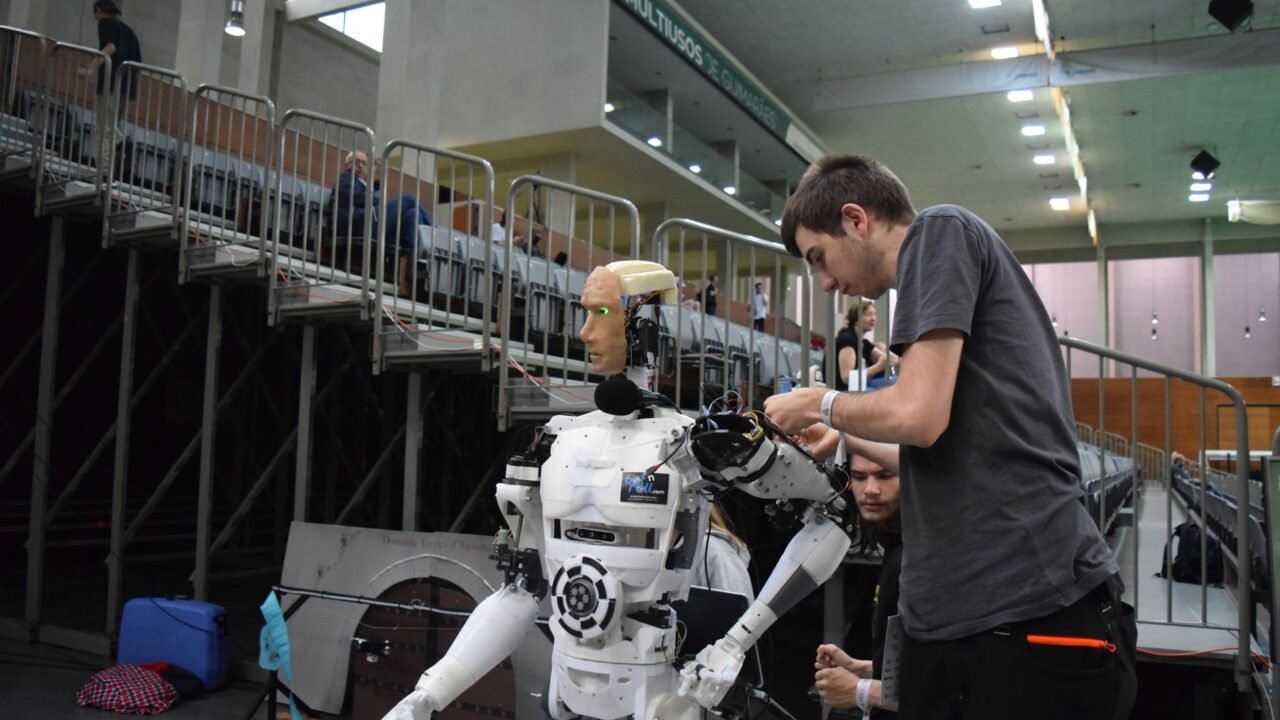
Google DeepMind officially announced Gemini Robotics 2, positioning it as a sophisticated vision-language-action model. This system integrates image recognition, language processing, and direct action control, allowing robots to interpret their surroundings and execute tasks in the physical world. The model’s versatility is a key highlight, enabling it to power everything from small-scale robotic arms used for precision work to large, complex humanoid robots requiring extensive coordination.
The company describes Gemini Robotics 2 as an “intelligence layer,” suggesting its role as a core operating system that imbues robots with enhanced adaptability. It is specifically designed to manage intricate full-body movements, perform delicate fine motor tasks, and orchestrate the actions of multiple robots working in concert. Alongside this primary release, DeepMind also introduced Gemini Robotics ER 2, an evolution of its embodied reasoning model, succeeding Gemini Robotics ER 1.6 from April. ER 2 focuses on enabling robots to understand their physical environment and make informed decisions about subsequent actions, serving as a critical higher-level control mechanism.
Why It Matters
The launch of Gemini Robotics 2 and ER 2 marks a significant advancement in robotic intelligence, pushing the boundaries of what autonomous systems can achieve. By providing a unified VLA model capable of controlling diverse robot types and coordinating complex actions, DeepMind is streamlining the development process for advanced robotics. This development is crucial for industries seeking more flexible and intelligent automation solutions, from manufacturing and logistics to healthcare and domestic assistance. The ability for robots to better understand and interact with their physical world, coupled with fine motor control and multi-robot coordination, opens new avenues for deployment and efficiency gains.
Industry Impact
This release is poised to have a profound impact across various industries reliant on automation and robotics. In manufacturing, Gemini Robotics 2 could enable more agile production lines where robots can adapt to changing tasks and environments with minimal reprogramming. Logistics and warehousing operations stand to benefit from improved multi-robot coordination, leading to faster and more efficient material handling. For specialized fields like surgery or hazardous environment exploration, the enhanced fine motor control and embodied reasoning capabilities could lead to safer and more precise robotic interventions. The availability of ER 2 in Google AI Studio also democratizes access to advanced reasoning capabilities, potentially accelerating innovation across the broader AI and robotics developer community.
Analysis
Google DeepMind’s strategy with Gemini Robotics 2 appears to be centered on establishing a universal intelligence layer for robotics, much like large language models have become for generative AI. By creating a single VLA model that scales from simple arms to complex humanoids, DeepMind addresses a long-standing challenge in robotics: the fragmentation of control systems across different hardware platforms. This unified approach could significantly reduce the complexity and cost associated with developing and deploying advanced robotic solutions, fostering greater interoperability and accelerating the pace of innovation.
The emphasis on “embodied reasoning” with ER 2 further highlights DeepMind’s commitment to creating truly intelligent robots that can navigate and understand the nuances of the physical world. Moving beyond mere task execution, ER 2 aims to provide robots with a deeper contextual awareness, allowing them to make more sophisticated decisions. This combination of advanced perception, language understanding, and intelligent action control positions DeepMind to become a dominant force in the foundational AI for robotics, potentially setting new industry standards for robotic autonomy and adaptability.
Competitive Landscape
The introduction of Gemini Robotics 2 intensifies competition within the rapidly expanding field of AI-powered robotics. Major technology companies and specialized robotics firms are all vying to develop the next generation of intelligent machines. Competitors like OpenAI, with its focus on general-purpose AI, and various industrial robotics leaders, are also investing heavily in vision-language models and advanced control systems. DeepMind’s move to offer early access to developers for Gemini Robotics 2 and make ER 2 available in Google AI Studio suggests a strategy to build an ecosystem around its models, aiming for broad adoption and integration across diverse robotic platforms before rivals can establish similar dominance.
Future Implications
Near-term (3-6 months): Early access to Gemini Robotics 2 will likely lead to initial prototypes and demonstrations showcasing its capabilities across various robotic form factors. The availability of ER 2 in Google AI Studio will enable developers to begin integrating advanced embodied reasoning into their existing or new robotic projects.
Medium-term (1-2 years): We can expect to see Gemini Robotics 2 integrated into a wider range of commercial and research robotics applications, particularly in areas requiring complex manipulation and multi-robot coordination. The enhanced reasoning capabilities of ER 2 will likely lead to more robust and autonomous robotic deployments in controlled environments.
Long-term (3-5 years): Gemini Robotics 2 could become a foundational operating system for a significant portion of the robotics industry, driving standardization and accelerating the development of highly adaptive and intelligent robots. This could pave the way for more widespread adoption of robots in unstructured environments, including homes and public spaces, as their ability to understand and interact with the physical world matures.
Actionable Insights
- Robotics developers should explore applying for early access to Gemini Robotics 2 to evaluate its potential for future projects.
- AI researchers and engineers should familiarize themselves with Gemini Robotics ER 2, available in Google AI Studio, to understand its embodied reasoning capabilities.
- Companies in manufacturing, logistics, and healthcare should assess how these advanced VLA models could enhance their automation strategies.
- Investors should monitor the adoption rate and performance benchmarks of Gemini Robotics 2 as indicators of its market impact.
- Product managers in robotics should consider how a unified intelligence layer could simplify their development pipelines and expand product capabilities.
What is Gemini Robotics 2?
Gemini Robotics 2 is Google DeepMind’s most advanced vision-language-action (VLA) model, designed to control a wide range of robots from tabletop arms to full-body humanoids. It functions as an intelligence layer, managing movement, fine motor tasks, and multi-robot coordination.
What is a VLA model in robotics?
A VLA (vision-language-action) model combines image recognition, language processing, and action control. This allows robots to understand visual information, process linguistic commands, and execute physical actions in real-world environments.
What is Gemini Robotics ER 2?
Gemini Robotics ER 2 is a model for “embodied reasoning,” meaning it helps robots understand the physical world and decide on appropriate actions based on that understanding. It serves as a higher-level control system and is an upgrade from the previous ER 1.6 model.
How can developers access these new models?
Developers can apply for early access to Gemini Robotics 2 through a waitlist provided by Google DeepMind. Gemini Robotics ER 2 is currently available for use within Google AI Studio.
What types of robots can Gemini Robotics 2 control?
Gemini Robotics 2 is designed to control a broad spectrum of robotic systems. This includes smaller tabletop arms for precision tasks, as well as complex, full-body humanoid robots requiring extensive coordination.
Key Takeaways
- Google DeepMind has launched Gemini Robotics 2, an advanced VLA model for controlling diverse robotic systems.
- The model acts as an “intelligence layer” for adaptive robots, enabling full-body movement, fine motor tasks, and multi-robot coordination.
- Gemini Robotics ER 2, an embodied reasoning model for higher-level control, was also introduced and is available in Google AI Studio.
- Developers can apply for early access to Gemini Robotics 2 via a waitlist.
- These developments aim to enhance robotic autonomy and adaptability across various industrial and research applications.