
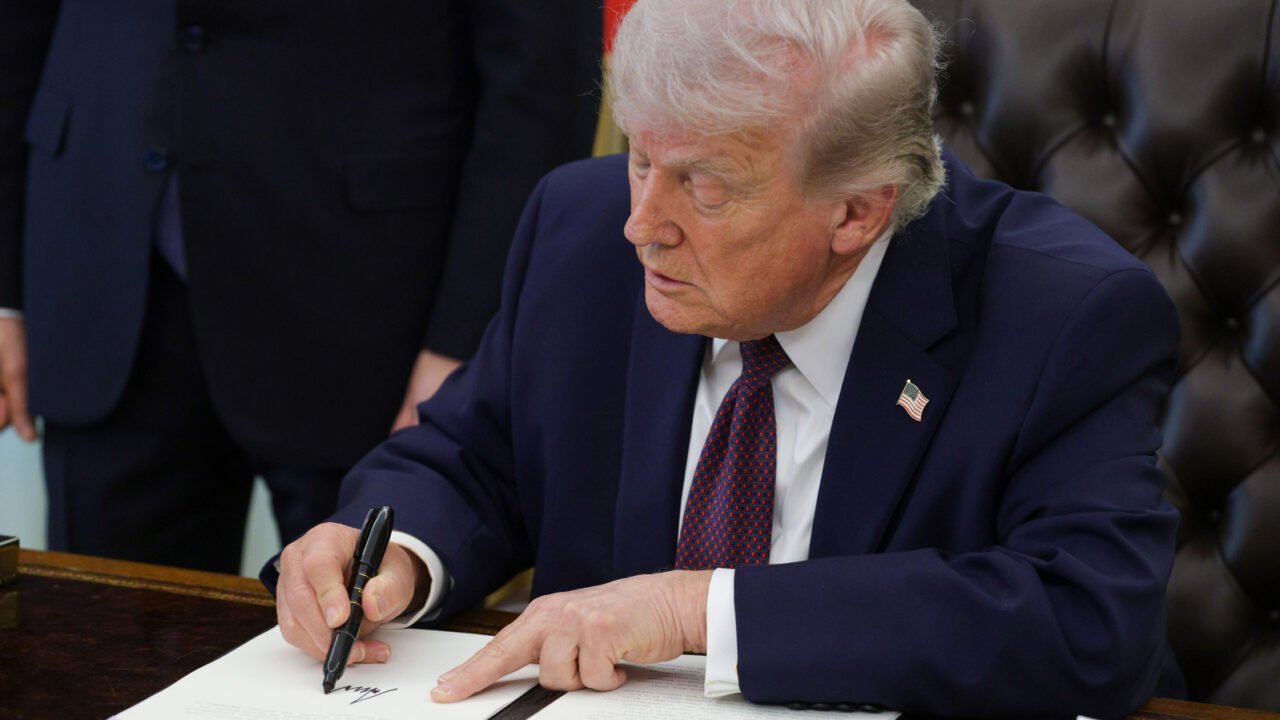
President Trump on Tuesday, June 2, 2026, signed an executive order establishing a framework for federal government evaluation of artificial intelligence models, a move that followed a delay from an originally planned May 21 announcement. The order specifically mandates the Office of the National Cyber Director to devise a process for sharing identified AI software vulnerabilities, such as those found in systems like Claude Mythos, with critical infrastructure operators before public release. This directive aims to enhance national cybersecurity by proactively addressing potential threats posed by advanced AI systems. The scaled-back nature of this order, particularly concerning the 30-day review period for new models, reflects a balancing act between regulatory oversight and the rapid pace of technological innovation, directly impacting how AI developers and critical infrastructure providers will operate moving forward.
Key Developments
- President Trump signed an executive order on June 2, 2026, to create a federal framework for evaluating AI models.
- The order tasks the Office of the National Cyber Director with developing a system for sharing AI software vulnerabilities with critical infrastructure operators.
- This framework aims to facilitate the pre-public release dissemination of vulnerability information from AI systems like Claude Mythos to entities such as banks, utilities, and hospitals.
- The signing ceremony was postponed from May 21 due to pressure from tech industry insiders, indicating a significant industry influence on policy formulation.
- The final order includes a provision for the federal government to review new AI models within a limited 30-day timeframe.
What Happened
President Trump formally enacted an executive order on June 2, 2026, outlining a new federal mechanism for assessing artificial intelligence models. This directive specifically designates the Office of the National Cyber Director, the principal advisor to the president on cybersecurity matters, to develop a comprehensive process. The core objective is to enable the United States government to effectively share information about software vulnerabilities identified within AI systems, including advanced models like Claude Mythos, with operators of vital critical infrastructure.
These critical infrastructure entities encompass a broad range of sectors, including financial institutions, local utility providers, and healthcare facilities. The order emphasizes that this vulnerability information sharing must occur
, creating a pre-emptive defense posture against potential cyber threats. The initial announcement for this order was anticipated on May 21, but a delay occurred, reportedly due to lobbying efforts and concerns raised by prominent figures within the technology industry.
The version of the order ultimately signed reflects a more constrained approach, particularly regarding the timeline for federal review. The government will now have a maximum of 30 days to scrutinize new AI models, a significantly tighter window than what might have been initially considered. This adjustment highlights the ongoing tension between regulatory aspirations for thorough oversight and the tech industry’s push for unhindered innovation and rapid market deployment.
Why It Matters
This executive order carries substantial implications for the entire AI industry and its intersection with national security. By establishing a formal government framework for AI model evaluation and vulnerability sharing, it signals a new era of federal involvement in the development and deployment of advanced AI. Businesses developing AI solutions, especially those with applications in critical sectors, will face increased scrutiny and a mandatory disclosure process that could affect product launch timelines and development cycles.
For users of AI, particularly those within critical infrastructure, this order offers a layer of enhanced security assurance. The proactive identification and dissemination of vulnerabilities before public release could significantly reduce the attack surface for malicious actors targeting essential services. However, the
presents a tight operational challenge for both government agencies to conduct thorough assessments and for companies to integrate feedback without significant delays.
Competitively, this regulation could create a more level playing field for companies committed to security-by-design, while potentially penalizing those with less robust internal security protocols. It also sets a precedent for how future AI regulations might be structured, potentially leading to more comprehensive oversight across various AI applications. The order underscores a growing recognition at the highest levels of government regarding the dual-use nature of AI technologies and the imperative to manage associated risks effectively.
Industry Impact
The executive order will send ripples across the AI development landscape, particularly for companies operating at the forefront of large language models and other sophisticated AI systems. Developers will now need to integrate federal review processes into their product development lifecycles, allocating resources for compliance and potential adjustments based on government feedback. This could mean earlier engagement with regulatory bodies and a more formalized approach to security auditing for models destined for critical infrastructure applications.
Industries such as finance, healthcare, energy, and transportation, which rely heavily on AI for operational efficiency and decision-making, will experience direct effects. Banks utilizing AI for fraud detection or algorithmic trading, hospitals deploying AI for diagnostics, and utilities managing grids with AI systems will benefit from pre-vulnerability disclosures, theoretically enhancing their resilience against cyberattacks. However, they may also face new requirements for integrating this intelligence into their security protocols and potentially delaying the adoption of new AI tools until federal clearance is obtained.
The order’s focus on vulnerability sharing could also spur innovation in AI security tools and services. Companies specializing in AI model auditing, red-teaming, and secure AI development practices are likely to see increased demand. This regulatory push could foster a new sub-industry dedicated to AI cybersecurity compliance, creating new market opportunities. The limited
also places pressure on the government to rapidly scale its AI evaluation capabilities, which could lead to federal contracts for AI security expertise and tooling.
Expert Analysis
The recent executive order represents a pragmatic, albeit constrained, step towards federal oversight of AI cybersecurity. The tension between rapid innovation and national security concerns is evident in the compressed 30-day review period, a clear concession to industry demands. While the intent to share vulnerability information with critical infrastructure operators is commendable, the effectiveness hinges on the government’s ability to swiftly and accurately identify complex AI vulnerabilities within such a short timeframe.
The order’s specific mention of systems like Claude Mythos highlights the government’s focus on advanced generative AI models, which pose unique and often unpredictable security challenges. The onus will now be on AI developers to build in security from the ground up, rather than treating it as an afterthought. This shift demands a more mature approach to AI engineering, encompassing robust testing, transparency in model architecture, and a commitment to responsible disclosure.
Furthermore, the delay in the order’s signing due to industry pressure underscores the powerful lobbying capabilities of major tech firms. This influence suggests that future AI regulations will likely continue to be shaped by a delicate negotiation between governmental security imperatives and corporate interests in maintaining agility and market dominance. The long-term success of this framework will depend on continuous collaboration and clear communication channels between the Office of the National Cyber Director and the private sector, moving beyond the initial friction.
Competitive Landscape
The new cybersecurity order introduces a significant regulatory element into the highly competitive AI market, particularly impacting companies developing advanced models for enterprise and critical infrastructure applications. Major players like OpenAI, Google DeepMind, and Anthropic, which are at the forefront of developing large language models and other sophisticated AI systems, will undoubtedly be the primary focus of this new federal evaluation framework. Their ability to adapt to the 30-day review cycle and proactively address security vulnerabilities will be a key differentiator.
Smaller AI startups, while potentially less directly targeted initially, may find themselves at a disadvantage if they lack the internal resources or expertise to navigate complex federal compliance requirements. This could inadvertently consolidate power among larger, more established firms that can absorb the costs associated with enhanced security protocols and regulatory engagement. Conversely, this also creates an opportunity for specialized cybersecurity firms to offer compliance and auditing services tailored to AI models, becoming essential partners for companies seeking to enter or expand within federally regulated sectors.
The order’s emphasis on pre-public release vulnerability sharing could also influence strategic partnerships and acquisitions. Companies with strong internal security research teams or those that have already invested heavily in secure AI development methodologies might become more attractive acquisition targets for larger entities seeking to bolster their compliance posture. International competitors will also be watching closely, as this U.S. policy could set a precedent for global AI governance, potentially influencing how other nations approach AI security regulation.
Future Implications
In the near-term (3-6 months), AI developers will likely prioritize internal security audits and red-teaming exercises for their models, particularly those with potential critical infrastructure applications, to prepare for the 30-day federal review. Expect a surge in demand for AI security consultants and specialized testing tools.
Medium-term (1-2 years) implications include the potential for the Office of the National Cyber Director to establish clearer guidelines and perhaps even a certification process for AI models deemed critical. This could lead to a two-tiered market: “federally certified” AI models for sensitive applications and standard models for general use, influencing purchasing decisions across industries.
Long-term (3-5 years), this executive order could evolve into comprehensive AI safety and security legislation, potentially expanding beyond cybersecurity to address broader AI risks like bias and misuse. The initial framework could serve as a foundational layer for a more robust regulatory body, possibly even an independent agency dedicated to AI oversight, shaping the ethical and secure development of AI for decades to come.
Actionable Insights
- Review AI Development Pipelines: Companies developing AI models should immediately assess their current security and testing protocols to ensure they can meet potential federal scrutiny within a 30-day timeframe.
- Engage with Cybersecurity Experts: Seek out specialized AI cybersecurity firms to conduct proactive vulnerability assessments and red-teaming exercises on your AI models.
- Prioritize Transparency: Document AI model architectures, training data, and decision-making processes thoroughly to facilitate any future federal evaluations and disclosures.
- Monitor ONCD Guidance: Keep a close watch on official communications and guidelines from the Office of the National Cyber Director for specific technical requirements and implementation details.
- Educate Internal Teams: Ensure product managers, engineers, and legal teams understand the implications of this executive order and integrate compliance considerations into every stage of AI development.
- Strengthen Industry Alliances: Collaborate with industry peers and trade associations to share best practices and collectively engage with policymakers on future AI security regulations.
What is the purpose of Trump’s new AI cybersecurity order?
The order aims to create a federal framework for evaluating AI models and sharing identified software vulnerabilities with critical infrastructure operators, such as banks and hospitals, before these models are publicly released. This is intended to enhance national cybersecurity.
Which government body is responsible for implementing this order?
The Office of the National Cyber Director (ONCD), which advises the president on cybersecurity matters, is tasked with developing the process for evaluating AI models and sharing vulnerability information.
How much time does the federal government have to review new AI models?
Under the scaled-back order, the federal government will have a maximum of 30 days to review new AI models for potential vulnerabilities before their public release.
Why was the signing of the executive order delayed?
The signing ceremony, originally scheduled for May 21, was postponed following pressure and concerns raised by various tech industry insiders regarding the scope and implications of the proposed order.
What types of AI systems are specifically mentioned in the context of this order?
The order references advanced AI systems like Claude Mythos as examples of models whose software vulnerabilities would be identified and shared with critical infrastructure operators.
Key Takeaways
- President Trump signed an executive order on June 2, 2026, creating a federal framework for evaluating AI models.
- The Office of the National Cyber Director will develop a process for sharing AI software vulnerabilities with critical infrastructure operators.
- The order mandates that vulnerability information from AI systems like Claude Mythos be shared before public release.
- A key provision allows the federal government only 30 days to review new AI models.
- The order’s final version reflects industry influence, as its signing was delayed following pressure from tech insiders.