Wetour Robotics recently highlighted a critical shift in the development trajectory of Physical AI, arguing that the future lies not in creating inherently “smarter” robots, but in enhancing how humans communicate with existing machines. This perspective challenges the industry’s predominant focus on advancing robotic autonomy and dexterity, as exemplified by companies like Boston Dynamics and Figure AI. The core insight suggests that current human-machine interaction models often create friction in real-world operational scenarios, from industrial settings to personal assistive devices. Addressing this communication gap could significantly accelerate the practical deployment and utility of physical AI systems across diverse sectors.
Key Developments
- The current Physical AI industry has largely prioritized advancements in robotic hardware, including improved actuators, locomotion, and manipulation capabilities.
- Companies like Boston Dynamics, Figure, and Unitree have made significant strides in developing more sophisticated and agile robotic platforms.
- A growing argument suggests that the bottleneck for widespread Physical AI adoption is not robot intelligence, but rather the intuitive and efficient communication channels between humans and machines.
- Practical scenarios, such as field technicians or logistics workers, demonstrate a clear need for less cumbersome ways to issue commands to connected devices.
- The emphasis is shifting towards creating smarter interfaces and interaction methods that allow humans to “be heard” by machines without disrupting their primary tasks.
What Happened
The conversation surrounding Physical AI has, for the past several years, been overwhelmingly dominated by the remarkable progress made on the robotic side of the equation. We’ve witnessed a parade of increasingly capable machines, demonstrating feats of balance, locomotion, and fine motor control that were once confined to science fiction. Innovators such as Boston Dynamics have pushed the boundaries of bipedal and quadrupedal movement, while companies like Figure AI and Unitree have showcased advanced dexterity and diverse form factors. This intense focus has led to significant engineering breakthroughs in areas like advanced actuators, sophisticated sensors, and resilient locomotion systems, marking a period of rapid evolution in the physical capabilities of autonomous systems.
However, this hardware-centric development has inadvertently created a communication chasm. As machines become more sophisticated in their physical actions, the methods for human operators to direct, inform, or query them often remain rudimentary. Consider a field technician high on a wind turbine, needing to interact with a diagnostic tool at their belt, or a logistics worker managing a loading dock, requiring a connected lift to move. In these situations, traditional interfaces—pulling out a smartphone, navigating complex menus, or issuing voice commands in noisy environments—introduce friction, distraction, and potential safety concerns. The machines exist, they perform their functions, but the human element struggles to seamlessly integrate with their operational flow.
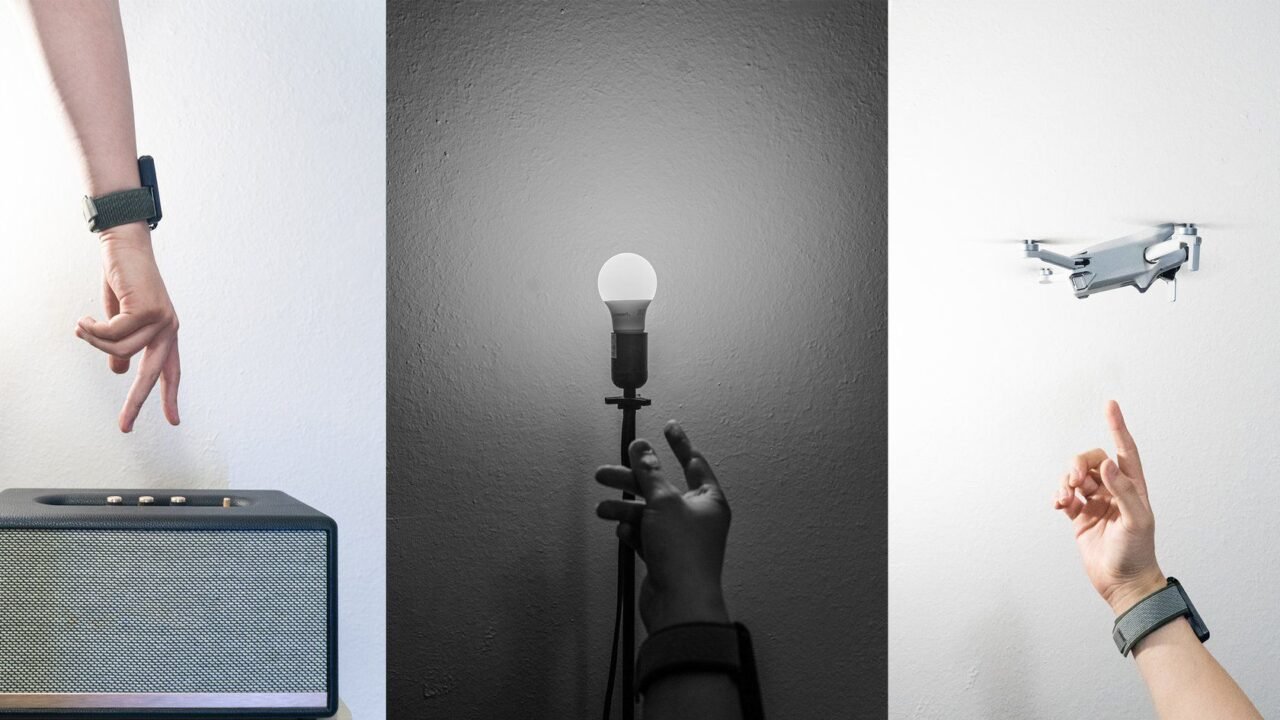
The emerging consensus, particularly championed by entities like Wetour Robotics, is that the industry has been building “from one side,” prioritizing the robot’s capabilities over the human’s ability to intuitively command them. This imbalance suggests that the next frontier in Physical AI is not about exponentially increasing a robot’s internal processing power or physical agility, but rather about developing more natural, context-aware, and unobtrusive interaction paradigms. It’s about enabling a human to “nudge” an assistive mobility device forward without breaking stride or drawing attention, or to redirect a pallet lift with a subtle gesture, making the machines truly responsive to the human operator’s immediate needs and circumstances.
Why It Matters
This re-evaluation of Physical AI’s core challenge carries profound implications for its widespread adoption and practical utility across numerous industries. By shifting focus from pure robotic intelligence to human-machine interaction, the industry acknowledges that the most advanced robot is only as effective as its most accessible interface. For businesses, this means potentially lower training costs, increased operational efficiency, and a significant reduction in human error, as workers can interact with machines more naturally without interrupting their primary tasks.
User experience stands to gain immensely. Imagine assistive technologies that respond to subtle intentions rather than explicit commands, or industrial robots that can be guided with intuitive gestures rather than complex programming. This evolution transforms machines from tools that require dedicated attention into extensions of human capability. Competitively, companies that master these intuitive interaction paradigms will gain a distinct advantage, as their solutions will be inherently more user-friendly and adaptable to real-world, dynamic environments. The regulatory landscape may also be influenced, as more natural human control mechanisms could simplify safety protocols and accelerate approval processes for new robotic applications.
Industry Impact
The impact of prioritizing human-machine interaction over sheer robotic prowess will reverberate throughout the entire AI and technology ecosystem, fundamentally reshaping how physical AI is designed, deployed, and perceived. Industries from manufacturing and logistics to healthcare and personal assistance stand to benefit significantly. In manufacturing, for instance, collaborative robots (cobots) could become truly collaborative, understanding human intent through subtle cues rather than requiring verbal commands or touch-panel inputs, thereby accelerating assembly lines and reducing downtime.
Logistics operations, currently grappling with labor shortages and efficiency demands, could see a dramatic improvement. Workers managing inventory or moving goods could direct connected forklifts or autonomous mobile robots (AMRs) with simple, context-aware gestures, keeping their hands free and eyes on their surroundings. This reduces the cognitive load on the operator, allowing for safer and faster task completion. In healthcare, assistive devices for the elderly or those with disabilities could offer a new level of independence, responding to subtle shifts in posture or gaze rather than relying on voice commands that might be difficult to articulate or privacy-invasive in public settings. Companies developing enterprise AI solutions will increasingly integrate these intuitive interaction layers, moving beyond just data processing to physical world interfaces.
Expert Analysis
The shift in perspective articulated by Wetour Robotics represents a maturation of the Physical AI domain, moving beyond the “wow” factor of robotic acrobatics to the practical realities of industrial and personal integration. For years, the narrative has been dominated by the engineering marvels of advanced locomotion and manipulation, often overlooking the equally complex challenge of seamless human integration. This new emphasis acknowledges that the most significant barrier to widespread adoption isn’t just a robot’s ability to perform a task, but its ability to perform it in concert with human operators, without adding cognitive burden or requiring specialized training.
This paradigm recognizes that many real-world scenarios do not demand a robot to independently “think” or “decide” in complex ways, but rather to execute specific, directed actions efficiently and safely under human supervision. The intelligence needed is not necessarily within the robot’s autonomous decision-making algorithms, but in the interface that translates human intention into machine action. This requires a deeper understanding of human ergonomics, cognitive psychology, and context-aware computing, moving beyond simple voice commands or touchscreens to multimodal interfaces that can interpret gestures, gaze, bio-signals, and even environmental cues.
Competitive Landscape
The competitive landscape in Physical AI is poised for a significant realignment as companies begin to internalize this shift towards human-centric interaction. While firms like Boston Dynamics and Figure AI have established strong reputations for their advanced robotic platforms, the next battleground will be in the realm of intuitive control and seamless integration. This creates an opportunity for new players specializing in multimodal interfaces, wearable tech for command input, or context-aware AI that can interpret subtle human cues.
Traditional robotics companies may need to acquire or partner with firms possessing expertise in human-computer interaction (HCI), sensor fusion for gesture recognition, and natural language processing tailored for operational environments. Software companies focusing on enterprise AI will also find new avenues for growth by developing middleware that translates complex human intentions into actionable robotic commands. The race will no longer be solely about who can build the most agile robot, but who can build the most symbiotic human-robot system, making the machine a true extension of human will rather than a separate, complex entity requiring explicit direction. This could also spur investment in haptic feedback systems and augmented reality overlays that enhance human perception and control over remote or autonomous physical assets.
Future Implications
Near-term (3-6 months): Expect to see a surge in research and development into multimodal human-machine interfaces, including advanced gesture recognition, gaze tracking, and bio-signal interpretation for controlling physical robots. Initial pilot programs in industrial settings will likely focus on integrating these new interaction methods with existing robotic fleets.
Medium-term (1-2 years): The market will likely witness the emergence of specialized “interaction AI” platforms designed to sit between human operators and diverse robotic hardware. These platforms will offer standardized APIs for interpreting human intent, enabling more rapid deployment of user-friendly Physical AI solutions across various sectors. Assistive mobility devices will begin incorporating more subtle, context-aware controls, moving beyond simple joysticks or voice commands.
Long-term (3-5 years): Human-robot interaction will become largely invisible, with machines anticipating needs and responding to implicit cues, making them feel like natural extensions of human capability. This will lead to a new generation of “cognitively ergonomic” robots that are designed from the ground up with human interaction as a primary consideration, ultimately democratizing access to complex robotic capabilities for non-specialist users.
Actionable Insights
- Evaluate current human-robot interaction bottlenecks: Conduct internal audits to identify pain points and inefficiencies in how your workforce currently interacts with automated systems.
- Invest in multimodal interface research: Explore technologies like advanced gesture recognition, haptic feedback, and natural language processing to enhance human-machine communication.
- Prioritize user experience in Physical AI deployments: Focus on intuitive, low-cognitive-load interaction methods rather than simply maximizing robot autonomy or physical capability.
- Foster interdisciplinary collaboration: Encourage teams of robotics engineers, UX designers, and cognitive scientists to co-create future Physical AI solutions.
- Pilot context-aware control systems: Implement small-scale trials of AI systems that can interpret environmental cues and human intent to streamline robotic operations.
- Standardize communication protocols: Advocate for and adopt open standards that allow diverse human input devices to seamlessly communicate with various robotic platforms.
What is Physical AI?
Physical AI refers to intelligent systems that interact with the physical world, often embodied as robots or smart devices. These systems use AI to perceive, reason, and act within their environment, performing tasks that require physical manipulation or movement.
Why is human-machine interaction becoming more important than smarter robots?
While robots have become highly capable, the methods for humans to command them often create friction, especially in dynamic, real-world scenarios. Enhancing intuitive interaction allows existing machines to be more effectively utilized, boosting efficiency and safety without requiring ever-increasing robotic autonomy.
What are examples of intuitive human-machine interaction?
Examples include using subtle gestures to control a robotic arm, gaze tracking to navigate an assistive device, or context-aware voice commands that adapt to noisy environments. The goal is to make interaction feel natural and unobtrusive, akin to human-to-human communication.
Which industries will be most affected by this shift?
Industries like manufacturing, logistics, healthcare, and personal assistance will see significant impact. Any sector where humans work alongside or direct physical machines stands to benefit from more intuitive and less disruptive control methods.
How does this impact the development of future robots?
Future robot development will likely integrate human-centric design principles from the outset. This means not just focusing on a robot’s physical capabilities, but also on how it senses and interprets human intent, leading to more collaborative and user-friendly machines.
Key Takeaways
- The Physical AI industry’s primary focus is shifting from robot autonomy to human-machine interaction.
- Current interfaces often create friction for human operators of physical AI systems.
- Enhancing how humans communicate with machines is crucial for widespread Physical AI adoption.
- Intuitive interaction methods will significantly boost operational efficiency and user experience.
- The next competitive frontier in robotics will be the seamless integration of human intent with machine action.