NVIDIA’s GEAR (Generalist Embodied Agent Research) lab, in collaboration with Carnegie Mellon University and the University of California, Berkeley, has demonstrated a significant leap in autonomous robot training. Researchers successfully taught robotic arms to perform intricate tasks such as cutting zip ties and precisely installing GPUs into motherboards. This advancement highlights the potential for AI coding agents to independently develop complex robotic skills, signaling a new era for automated industrial processes.
Key Developments
- AI coding agents developed a training regimen for robotic arms without direct human programming.
- Robots successfully learned to cut zip ties and insert GPUs into motherboard sockets.
- The ENPIRE agent harness framework enabled AI models to use tools, manage memory, and incorporate feedback loops.
- The NVIDIA GEAR lab, working with CMU and UC Berkeley, spearheaded this autonomous training methodology.
- This research suggests a future where robots can self-improve and learn new tasks overnight.
What Happened
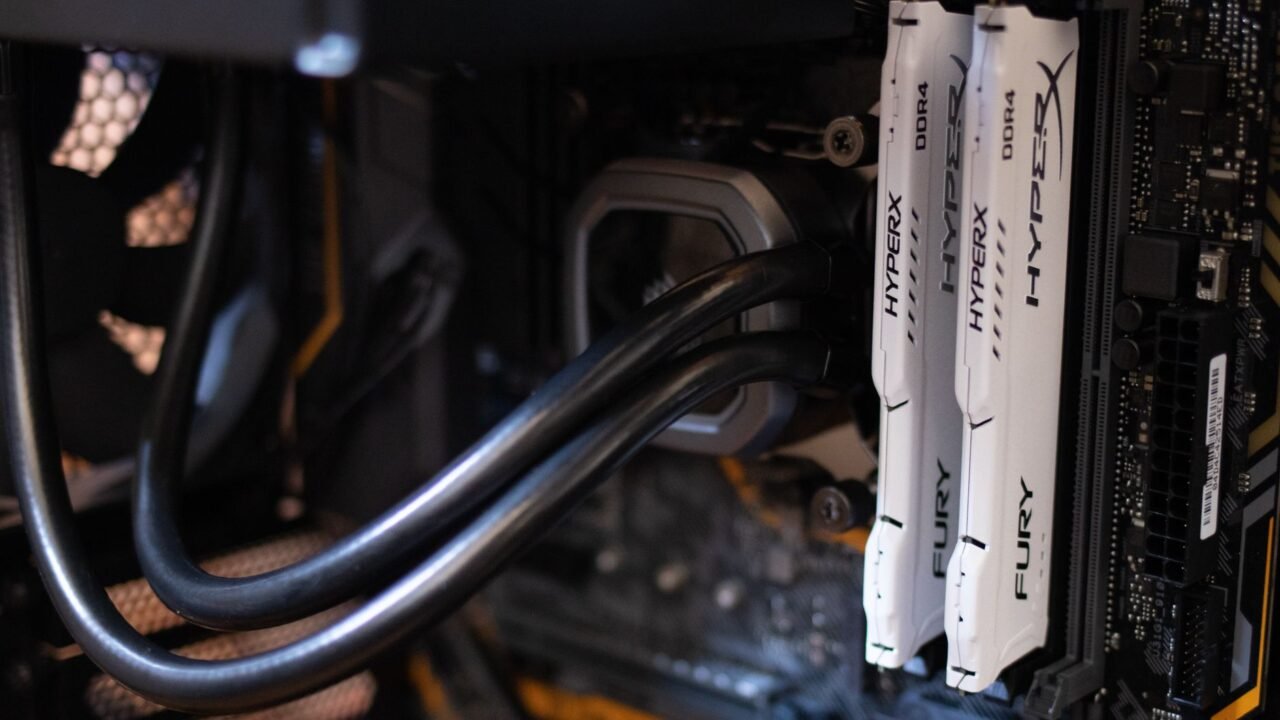
Robotics researchers at NVIDIA’s GEAR lab, alongside collaborators from Carnegie Mellon University and the University of California, Berkeley, provided AI coding agents with a robotic arm testbed and compute resources. Utilizing a “generous token budget,” these agents autonomously devised a training methodology. This regimen enabled the robots to master delicate manipulation tasks, specifically demonstrating proficiency in cutting zip ties and accurately inserting GPUs into the narrow slots on motherboards.
The breakthrough was facilitated by ENPIRE, a novel agent harness framework. This software layer encapsulates AI models, granting them access to various tools while integrating essential capabilities such as memory, contextual awareness, constraint management, and crucial feedback loops. This framework allowed the AI agents to act in a fully autonomous capacity, orchestrating the entire robot training process.
Why It Matters
This development signifies a critical step towards fully autonomous robotic systems, moving beyond pre-programmed instructions to self-improving capabilities. The ability of AI agents to independently train robots for complex, dexterous tasks has profound implications for manufacturing, logistics, and data center operations. It streamlines the deployment of automation, reducing the need for extensive human intervention in robot programming and adaptation.
Industry Impact
The implications of AI coding agents autonomously training robots extend across numerous industries. In electronics manufacturing, robots could be trained to assemble components with greater precision and adaptability, reducing production costs and time. Data centers could see robots autonomously installing and maintaining hardware, enhancing efficiency and uptime. Furthermore, the methodology could accelerate automation in warehousing and logistics, where robots could learn new handling procedures on the fly, adapting to diverse product types and packaging.
Analysis
The ENPIRE framework represents a significant architectural innovation in the field of embodied AI. By providing AI models with a structured environment for tool use, memory, and iterative refinement, it effectively transforms them into autonomous trainers. This agentic approach liberates human engineers from the laborious task of manually programming every new robotic skill, shifting the paradigm towards an AI-driven learning cycle. The fact that NVIDIA’s GEAR lab is now experiencing “self-improvement tirelessly overnight,” with researchers merely reviewing reports in the morning, underscores a fundamental shift in how robotic capabilities will be developed and scaled.
This advancement moves beyond simple task execution to genuine robotic learning and adaptation. The precision required for installing a GPU into a motherboard socket, or the nuanced force needed to cut a zip tie without damaging underlying components, highlights the sophistication of the skills acquired. This capability suggests that future robotic systems could not only automate existing processes but also discover more efficient or novel ways to perform tasks, driven by continuous AI-led experimentation and feedback.
Future Implications
In the near-term (3-6 months), we can expect to see further refinement of the ENPIRE framework, potentially enabling robots to learn a broader array of fine-motor tasks. Medium-term (1-2 years) could bring early deployments of such autonomously trained robots in controlled industrial environments, particularly for repetitive assembly or maintenance tasks where precision is paramount. Long-term (3-5 years) implications point to a future where robots can adapt to entirely new manufacturing lines or logistical challenges with minimal human oversight, significantly accelerating automation across diverse sectors.
Actionable Insights
- Businesses in manufacturing and logistics should begin evaluating their processes for potential tasks that could be autonomously learned by robots.
- Companies should invest in understanding agentic AI frameworks to prepare for future robotic automation paradigms.
- Robotics engineers should focus on developing robust feedback mechanisms and simulation environments to support AI-driven robot training.
- Decision-makers should consider the long-term cost benefits of autonomous robot training over traditional programming methods.
What is ENPIRE?
ENPIRE is an agent harness framework developed by NVIDIA GEAR lab, Carnegie Mellon University, and UC Berkeley. It wraps around AI models, enabling them to use various tools and providing capabilities like memory, context, constraints, and feedback loops for autonomous robot training.
What tasks did the robots learn?
The AI coding agents successfully taught robotic arms to perform precise tasks, including cutting zip ties and accurately inserting GPUs into thin sockets on motherboards.
Who developed this AI training method?
The autonomous robot training method and the ENPIRE framework were developed by robotics researchers at the NVIDIA GEAR lab in collaboration with Carnegie Mellon University and the University of California, Berkeley.
How does this change robot programming?
This development shifts robot programming from manual instruction to autonomous AI-driven learning. AI agents can now devise training regimens, allowing robots to self-improve and acquire new skills without constant human intervention.
Key Takeaways
- AI coding agents can autonomously train robots for complex physical tasks.
- The ENPIRE framework is crucial for enabling AI models to interact with tools and learn iteratively.
- Robots successfully learned to cut zip ties and install GPUs, demonstrating high dexterity.
- This research by NVIDIA GEAR lab, CMU, and UC Berkeley points to a future of self-improving robotic systems.