South Africa possesses an extraordinary advantage in the global artificial intelligence arena, controlling approximately
, essential materials for semiconductor and data-center infrastructure. This unique resource endowment, coupled with the continent’s largest data-center market, positions the nation to dictate terms in the AI supply chain. Its established relationships with hyperscale cloud providers further strengthen its procurement capabilities, a luxury most African countries lack. The ongoing competition between Chinese and American technology giants for control of Africa’s burgeoning digital infrastructure underscores the immediate strategic importance of South Africa’s position.
Key Developments
- South Africa holds a unique strategic position in the global AI supply chain due to its vast reserves of platinum-group metals, critical for semiconductor and data-center components.
- The nation hosts the largest data-center market in Africa, attracting significant investment and competition from global technology firms.
- Existing relationships with hyperscale cloud providers give South Africa considerable procurement influence in the AI infrastructure sector.
- Despite these significant advantages, South Africa’s current draft AI policy fails to capitalize on its unique leverage.
What Happened
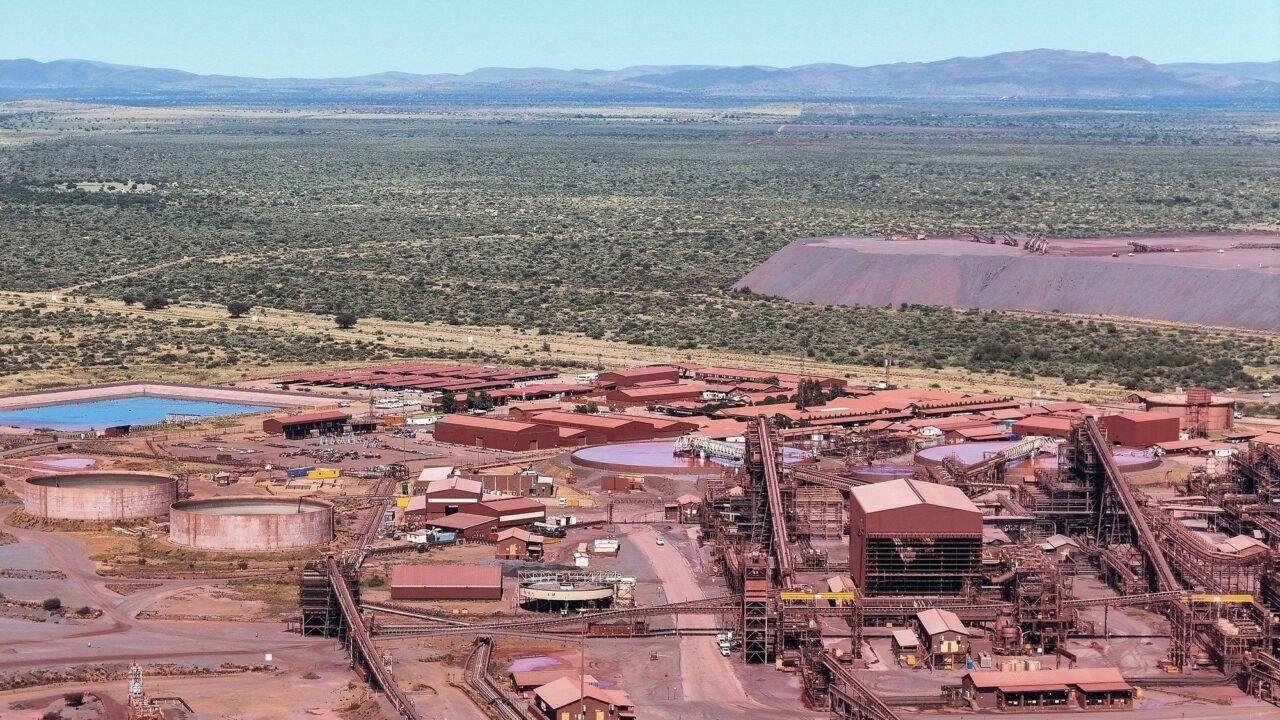
South Africa, often perceived as just another developing nation grappling with AI governance, stands apart due to its inherent strategic assets. The country’s Bushveld Complex, a geological formation, is the primary source of platinum-group metals (PGMs), which are indispensable for advanced electronics, including components used in AI-specific semiconductors and the cooling systems for large data centers. This geological reality grants South Africa a rare form of economic and geopolitical leverage in the foundational elements of AI infrastructure.
Beyond raw materials, South Africa has developed Africa’s most robust data-center market, serving as a critical hub for digital services across the continent. This infrastructure attracts major global technology players, including both American and Chinese firms, who are actively vying for influence and control over the digital systems that will underpin public and private sectors throughout Africa. The presence of these hyperscalers provides South Africa with direct negotiation power regarding technology transfer, investment, and data sovereignty.
However, despite these formidable advantages, South Africa’s recently drafted AI policy does not reflect an understanding or strategic utilization of this leverage. The policy’s general approach mirrors that of many other nations, focusing on ethical guidelines and regulatory frameworks without explicitly articulating how the country’s unique resource and infrastructure position can be used to shape global AI development or secure national interests in the emerging AI economy. This omission represents a missed opportunity to assert significant influence on the global AI stage.
Why It Matters
The underutilization of South Africa’s AI leverage carries profound implications for its economic future and its standing in the global technology order. By not strategically integrating its control over critical PGM reserves and its dominant data-center infrastructure into its AI policy, the nation risks becoming a mere resource provider rather than a co-creator or influencer in the AI value chain. This oversight could relegate South Africa to a passive role, missing the chance to dictate terms on technology access, data governance, and the localization of AI development.
For the broader industry, this situation highlights a critical blind spot in how nations perceive and capitalize on their unique assets in the AI era. Countries with control over essential inputs, whether raw materials, energy, or specialized talent, have an opportunity to shape the future of AI in ways that extend beyond conventional regulatory frameworks. South Africa’s current approach, if unchanged, sets a precedent where fundamental resource control is decoupled from strategic technology policy, potentially diminishing the influence of resource-rich nations in the global AI discourse.
The competitive dynamics between global tech superpowers, particularly the US and China, are playing out directly on South African soil. How South Africa leverages its position in this geopolitical contest will determine not only its own digital sovereignty but also the broader technological trajectory for the African continent. A proactive policy could secure favorable investment, technology transfer, and capacity building, while a reactive stance might lead to fragmentation and dependence.
Industry Impact
This situation directly impacts several key industries, from semiconductor manufacturing to cloud computing and data infrastructure. For global semiconductor firms, South Africa’s PGM reserves are a non-negotiable input, making the nation a critical node in their supply chains. A more assertive South African AI policy could influence pricing, supply agreements, and even encourage localized processing or manufacturing of these materials, thereby shifting parts of the value chain closer to the source.
The cloud computing sector, particularly hyperscalers like Amazon Web Services, Microsoft Azure, and Google Cloud, which operate extensive data centers in South Africa, faces direct implications. A strategic AI policy could introduce requirements for local data residency, specific data governance standards, or even mandates for AI development to occur within South Africa, leveraging local talent and infrastructure. This would affect their operational models, investment strategies, and competitive positioning within the African market.
Furthermore, the development of AI applications and services across various sectors—from healthcare to finance and agriculture—within Africa would be profoundly influenced. If South Africa’s policy encourages domestic AI innovation and data utilization, it could spur the growth of local tech ecosystems, creating jobs and fostering indigenous solutions tailored to African challenges. Conversely, a passive policy might lead to the continued dominance of foreign AI solutions, potentially limiting local economic benefits and perpetuating technological dependence.
Expert Analysis
South Africa’s current draft AI policy, while well-intentioned in its pursuit of ethical AI, appears to miss a fundamental opportunity to weaponize its unique geopolitical and economic advantages. The nation controls a disproportionate share of critical raw materials for AI infrastructure and hosts the continent’s most developed data-center market. This combination creates a powerful fulcrum for negotiating technology transfer, investment, and sovereign control over AI development, yet the policy does not reflect this strategic understanding.
The competition between global technology powers for influence in Africa’s digital future presents South Africa with a rare chance to extract significant concessions. By aligning its resource and infrastructure leverage with its AI governance framework, South Africa could demand preferential access to advanced AI models, secure commitments for local AI research and development, or even establish itself as a hub for ethical AI testing and deployment under its own terms. The window for this type of assertive policy-making is finite, as alternative supply chains and data infrastructure developments could eventually dilute this current advantage.
Moreover, the policy could be instrumental in fostering a self-reliant African AI ecosystem. By leveraging its position, South Africa could champion continent-wide data governance standards and promote collaborative AI development that addresses local challenges, rather than passively adopting frameworks designed for different contexts. This proactive approach would not only benefit South Africa but could also serve as a model for other resource-rich nations seeking to assert their agency in the global AI landscape.
Competitive Landscape
The competitive landscape for AI infrastructure and services in Africa is intensifying, with South Africa at its epicenter. American technology giants like Microsoft, Amazon, and Google have invested heavily in establishing cloud regions and data centers in the country, viewing it as a gateway to the broader African market. These companies aim to provide scalable computing power and AI services to enterprises and governments across the continent, solidifying their market share.
Simultaneously, Chinese technology firms, including Huawei and Alibaba Cloud, are aggressively expanding their presence, often offering competitive infrastructure solutions and financing arrangements. Their strategy frequently involves partnering with local governments and state-owned enterprises, particularly in telecommunications and smart city initiatives. This dual competition means South Africa has multiple suitors vying for its business and influence, creating an ideal environment for strategic negotiation.
The current draft policy, by not explicitly leveraging South Africa’s unique assets, risks allowing these global competitors to dictate terms rather than the other way around. A more assertive policy could demand specific commitments on local job creation, technology transfer, or even equity stakes in local operations in exchange for access to its critical resources and data center market. Without such provisions, the nation’s immense strategic value remains largely unmonetized in the geopolitical AI contest.
Future Implications
Near-term (3–6 months): Expect increased scrutiny and debate around South Africa’s draft AI policy, with calls from industry and academic circles for amendments that better reflect the nation’s strategic leverage. International tech companies operating in South Africa will likely monitor these discussions closely, potentially initiating lobbying efforts to influence policy adjustments.
Medium-term (1–2 years): If the policy remains unchanged, South Africa risks missing a crucial opportunity to establish itself as a leading voice in global AI governance, particularly concerning resource-rich developing nations. This could lead to a continued reliance on foreign AI solutions and infrastructure, potentially limiting the growth of indigenous AI capabilities and exacerbating digital divides. Conversely, a revised, more assertive policy could trigger significant new investments and technology transfer agreements, as global players seek to secure access to South Africa’s unique assets.
Long-term (3–5 years): The ultimate trajectory of South Africa’s AI future will be determined by its policy choices today. A failure to capitalize on its unique position could lead to a scenario where its critical resources are merely extracted, and its data centers serve primarily as conduits for foreign-developed AI, rather than as engines for local innovation. Conversely, a strategic and proactive policy could position South Africa as a key player in shaping the global AI landscape, fostering a vibrant domestic AI ecosystem, and enhancing its geopolitical influence.
Actionable Insights
- Advocate for policy revisions that explicitly link South Africa’s PGM reserves and data-center dominance to its AI governance framework, demanding technology transfer and local R&D commitments.
- Engage with government bodies and policymakers to highlight the economic and geopolitical value of a leverage-based AI strategy.
- Explore public-private partnerships that incentivize the localized processing of PGMs for semiconductor manufacturing, creating higher-value domestic industries.
- Invest in domestic AI talent development programs, ensuring that South Africans are equipped to build and manage the AI infrastructure and applications of the future.
- Champion the development of open-source AI models and data sets tailored to African contexts, reducing reliance on proprietary foreign technologies.
- Establish a national AI strategy council comprising experts from industry, academia, and government to continuously monitor and adapt to the evolving global AI landscape.
What unique assets does South Africa have in the AI landscape?
South Africa controls approximately 88% of global platinum-group metal reserves, essential for semiconductor and data-center components. It also hosts the largest data-center market on the African continent, providing critical infrastructure for AI development.
Why is South Africa’s draft AI policy considered a missed opportunity?
The draft policy focuses on general ethical guidelines without strategically leveraging the nation’s control over critical raw materials and its dominant data-center market. This oversight fails to capitalize on its unique position to influence global AI development and secure national interests.
How do platinum-group metals (PGMs) relate to AI infrastructure?
PGMs are critical inputs for advanced electronics, including specific components in AI semiconductors and cooling systems for large-scale data centers. Their scarcity and necessity give South Africa significant leverage in the AI supply chain.
What is the geopolitical significance of South Africa’s AI position?
South Africa is a battleground for Chinese and American technology companies competing for control of Africa’s digital infrastructure. Its unique assets provide an opportunity to dictate terms and secure favorable technology transfer and investment, shaping the continent’s AI future.
What could a more strategic AI policy achieve for South Africa?
A more strategic policy could demand technology transfer, encourage localized AI research and development, secure preferential access to advanced AI models, and establish South Africa as a hub for ethical AI, thereby enhancing its digital sovereignty and economic benefits.
Key Takeaways
- South Africa possesses unparalleled leverage in the global AI supply chain through its control of 88% of global platinum-group metal reserves.
- The nation hosts Africa’s largest data-center market, attracting intense competition from global technology giants.
- South Africa’s current draft AI policy fails to capitalize on its unique resource and infrastructure advantages, representing a significant strategic oversight.
- This missed opportunity could relegate South Africa to a passive role in the AI value chain, rather than an influential co-creator.
- A revised, assertive AI policy could secure significant technology transfer, investment, and foster indigenous AI capabilities, enhancing national digital sovereignty.