Genesis AI just unveiled Genesis World 1.0, a comprehensive physics platform designed to dramatically accelerate robotics foundation model development and evaluation. This new suite integrates a high-fidelity physics engine, the real-time path-traced renderer Nyx, the Python-to-GPU compiler Quadrants, and a unified simulation interface. The release directly addresses the often-overlooked bottleneck in robotics model creation: the speed at which candidate policies can be evaluated and compared. This innovation promises to reshape how next-generation robotic systems are trained, moving beyond data acquisition to focus on the iteration cycle itself, a critical step for scaling intelligent automation.
Key Developments
- Genesis AI launched Genesis World 1.0, a unified platform for robotics foundation model evaluation.
- The platform comprises a physics engine, Nyx (a real-time path-traced renderer), Quadrants (a Python-to-GPU compiler), and a simulation interface.
- Genesis World aims to resolve the bottleneck of slow policy evaluation in robotics development.
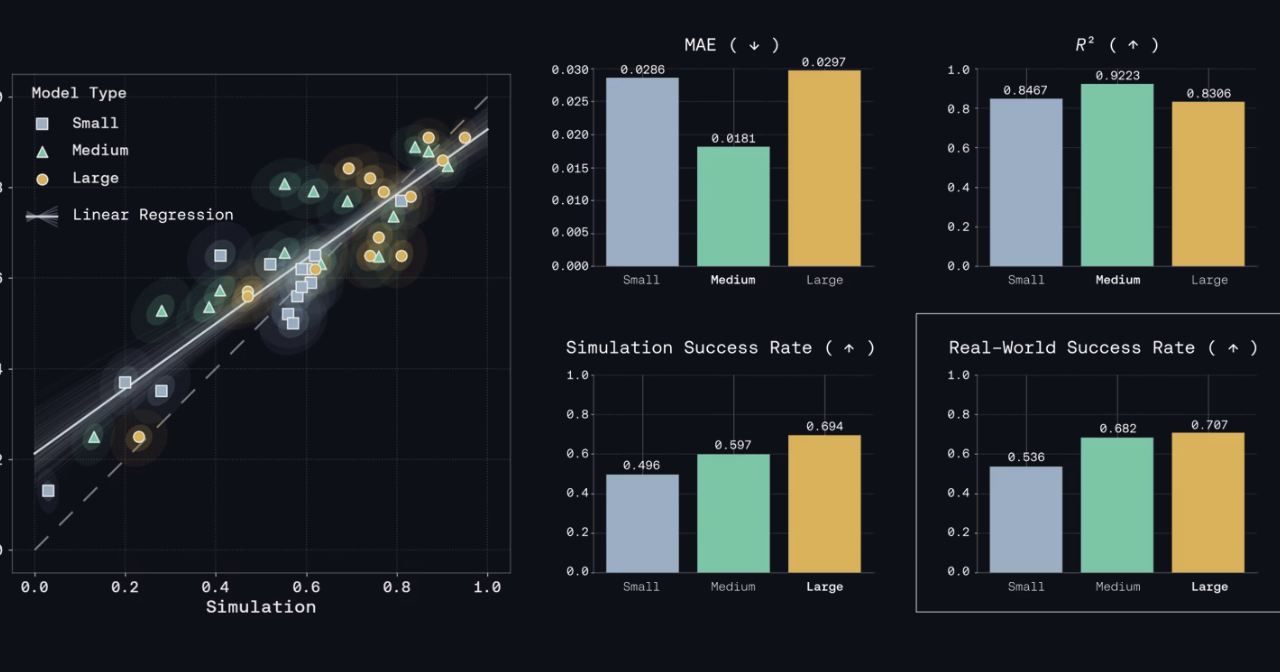
- A single policy evaluation, which previously required over 200 hours of real-world robot operation, can now be executed significantly faster within the simulation.
- The system is engineered to enable statistically meaningful comparisons across multiple model checkpoints at an unprecedented pace.
What Happened
Genesis AI formally introduced Genesis World 1.0, a sophisticated platform specifically engineered to streamline the development of robotics foundation models. This release bundles several advanced technologies, including a proprietary physics engine, Nyx for photorealistic real-time rendering, and Quadrants for efficient Python-to-GPU compilation. The integrated simulation interface completes the package, providing a cohesive environment for researchers and developers.
The core objective behind Genesis World 1.0 is to tackle the sluggish iteration speeds inherent in traditional robotics model development. While much industry attention has focused on data collection and augmentation, Genesis AI posits that the true bottleneck lies in the arduous process of evaluating new policies and comparing different model checkpoints. The company highlighted that a typical policy evaluation, encompassing hundreds of tasks and episodes, demands more than 200 hours of continuous real-world robot operation, requiring dedicated human oversight and a physical robot station.
This extensive real-world testing makes statistically robust comparisons across numerous model iterations impractical and costly. Genesis World 1.0 directly confronts this challenge by moving these intensive evaluations into a highly optimized simulated environment. By drastically reducing the time and resources required for each evaluation pass, the platform intends to enable a much faster development cycle, allowing teams to experiment, refine, and validate robotic behaviors with greater agility.
Why It Matters
The introduction of Genesis World 1.0 carries significant implications for the entire robotics and AI industry, particularly in accelerating the path to viable general-purpose robots. Historically, the development of complex robotic behaviors has been hampered by the immense time and resource investment required for real-world testing. Each adjustment to a policy, each refinement of a model, necessitated a lengthy and expensive physical trial, creating a drag on innovation.
Genesis AI’s platform directly targets this inefficiency, promising to transform the economics and timelines of robotics development. By enabling rapid, high-fidelity simulation-based evaluation, teams can iterate on designs and policies at a pace previously unimaginable. This shift is not merely an incremental improvement; it represents a fundamental change in methodology, allowing developers to quickly discard ineffective approaches and hone promising ones. The business impact is profound: reduced development costs, faster time-to-market for new robotic capabilities, and a lower barrier to entry for complex robotics research. For enterprises investing in automation, this means quicker deployment of more capable and reliable systems.
Furthermore, the ability to perform statistically meaningful comparisons across numerous model checkpoints within a simulated environment will lead to more robust and generalizable robotic foundation models. This directly addresses a critical challenge in AI: creating models that perform reliably across a wide array of scenarios without extensive retraining. The competitive dynamics within the robotics sector are poised for disruption, as companies capable of adopting such simulation-first development pipelines will gain a substantial advantage in bringing advanced robotic solutions to market.
Head-to-Head Comparison
| Feature | Genesis World 1.0 | Traditional Robotics Development |
|---|---|---|
| Pricing | Subscription-based (projected) | High CapEx (robots, operators, facility) |
| Performance | Accelerated, high-fidelity simulation | Real-world, time-consuming execution |
| Best For | Robotics foundation model evaluation, rapid iteration | Final real-world validation, niche deployments |
| Key Strength | Speed of iteration, scalability of evaluation | Real-world fidelity (eventual) |
| Main Weakness | Sim-to-real gap challenges | Extremely slow development cycle, high cost |
Industry Impact
Genesis World 1.0 is set to send ripples across several sectors, fundamentally altering how industries approach automation and AI integration. The most immediate impact will be felt in the robotics research and development community. Academic institutions and corporate R&D labs, previously constrained by the physical limitations and costs of robot fleets, can now accelerate their exploration of novel control policies, reinforcement learning algorithms, and multi-robot coordination strategies. This democratization of high-speed evaluation could lead to a surge in foundational breakthroughs.
Manufacturing, logistics, and healthcare industries stand to benefit significantly. Companies like Amazon Robotics, Boston Dynamics, and FANUC, which are constantly pushing the boundaries of automated systems, will find Genesis World 1.0 an indispensable tool for developing more adaptable and intelligent robots. For example, a logistics company seeking to optimize warehouse picking robots can rapidly test thousands of gripper designs and path planning algorithms in simulation, reducing deployment risks and operational downtime. Similarly, healthcare providers exploring robotic surgical assistants or patient care robots can refine their behaviors in a safe, virtual environment before costly and complex clinical trials.
Beyond traditional robotics, the platform’s capabilities could also influence autonomous vehicle development, particularly for low-level control systems and sensor fusion, where simulating complex physics interactions is paramount. Companies like Waymo or Cruise, while already having sophisticated simulation environments, might find specialized components of Genesis World 1.0, like Nyx’s advanced rendering, useful for training perception models in diverse virtual conditions. The overall effect will be a shortening of the innovation cycle, bringing more capable and reliable AI-powered robots into practical application faster, thereby accelerating the broader adoption of automation across the economy.
Expert Analysis
The release of Genesis World 1.0 represents a strategic reorientation in the quest for advanced robotics. For too long, the industry has fixated on the volume of data, often overlooking the equally critical dimension of iteration velocity. Genesis AI’s approach acknowledges that even with abundant data, if the feedback loop from policy implementation to evaluation is protracted, progress will remain sluggish. This platform shifts the emphasis from brute-force data collection to intelligent, rapid experimentation, a methodology proven effective in other areas of software development.
The integrated nature of Genesis World 1.0, combining a robust physics engine with a real-time renderer and a specialized compiler, is particularly noteworthy. This is not merely a simulation tool; it is an end-to-end development environment. The inclusion of Quadrants, a Python-to-GPU compiler, suggests a keen understanding of developer workflows, aiming to minimize the friction between high-level algorithm design and low-level computational efficiency. This integration is key to achieving the promised speed-up in evaluation, allowing researchers to focus on algorithmic innovation rather than infrastructure plumbing.
However, the perennial “sim-to-real” gap remains a challenge. While Genesis World 1.0 promises high fidelity, the ultimate test for any robotic policy still lies in its performance in the physical world. The platform’s success will hinge on its ability to accurately model real-world complexities – friction, sensor noise, environmental variations – such that policies trained in Genesis World generalize effectively. Nevertheless, by dramatically increasing the number of iterations possible in simulation, Genesis AI is providing a powerful tool to narrow this gap more quickly than ever before.
Competitive Landscape
The robotics simulation market, while not as widely publicized as large language models, is a fiercely contested arena with several established players and emerging innovators. NVIDIA’s Isaac Sim, built on its Omniverse platform, is a significant competitor, offering photorealistic rendering and robust physics simulation for robotics development. Isaac Sim also emphasizes data generation for AI training and synthetic data for perception models, leveraging NVIDIA’s powerful GPU ecosystem. Another strong contender is Unity Technologies, whose Unity Engine is widely used for creating simulation environments, particularly for autonomous vehicles and industrial robotics, offering a broad feature set and a large developer community.
Other notable players include MathWorks with Simulink and Gazebo, an open-source robotics simulator that is a staple in academic and research settings. Each of these platforms brings its own strengths, whether it’s deep integration with specific hardware, a focus on particular types of physics, or a strong community. Genesis AI’s Genesis World 1.0 distinguishes itself by explicitly focusing on the “iteration speed” bottleneck for robotics foundation models and offering a tightly integrated suite of components (Nyx, Quadrants) tailored for this specific challenge. While competitors offer powerful simulation tools, Genesis AI’s value proposition centers on directly addressing the evaluation cycle itself, aiming for a more complete, opinionated solution for rapid policy iteration.
Future Implications
Near-term (3-6 months): Expect early adopters in academic research labs and well-funded corporate R&D divisions to begin integrating Genesis World 1.0 into their workflows, reporting initial benchmarks on the speed-up achieved in policy evaluation. This will likely lead to a surge in research papers demonstrating faster iteration cycles for complex robotic tasks.
Medium-term (1-2 years): The platform’s capabilities will likely drive the development of more sophisticated robotics foundation models, leading to robots capable of performing a wider array of tasks with less human intervention. We could see the emergence of specialized “Genesis World Certified” developers, indicating expertise in this accelerated development paradigm. The “sim-to-real” gap will become a primary focus for Genesis AI and its users, leading to further platform enhancements aimed at bridging this divide.
Long-term (3-5 years): Genesis World 1.0, or its successors, could become a standard tool in the industrial deployment of AI-powered robots. This could enable “digital twin” simulations for entire factories or logistics centers, allowing for continuous optimization of robotic fleets in a virtual environment before physical implementation. The rapid iteration cycles could also accelerate the development of truly adaptive and self-learning robots, pushing the boundaries of what autonomous systems can achieve.
Actionable Insights
- Robotics developers should investigate Genesis World 1.0 to understand its potential for accelerating policy evaluation and reducing development timelines.
- Enterprise AI leaders should assess their current robotics development bottlenecks, particularly around iteration speed, and consider how advanced simulation platforms like Genesis World could offer a competitive edge.
- Researchers focused on reinforcement learning for robotics should explore integrating Quadrants into their computational pipelines to optimize Python-based policy execution on GPUs.
- Companies in manufacturing and logistics should evaluate the long-term cost savings and efficiency gains possible by shifting more of their robot behavior development to high-fidelity simulation.
- Organizations with significant investments in physical robot fleets should consider how a platform like Genesis World could reduce wear-and-tear and operational costs associated with real-world testing.
What is Genesis World 1.0?
Genesis World 1.0 is a comprehensive physics platform released by Genesis AI, designed to accelerate the development and evaluation of robotics foundation models through high-fidelity simulation. It includes a physics engine, real-time renderer Nyx, Python-to-GPU compiler Quadrants, and a simulation interface.
What problem does Genesis World 1.0 solve?
The platform addresses the bottleneck of slow policy evaluation in robotics development. It dramatically reduces the time and resources required to test and compare robotic behaviors, which previously demanded hundreds of hours of real-world robot operation for a single evaluation pass.
What are the key components of Genesis World 1.0?
Genesis World 1.0 consists of four main components: the Genesis World physics engine for realistic interactions, Nyx for real-time path-traced rendering, Quadrants for efficient Python-to-GPU compilation, and an integrated simulation interface for user interaction.
How does Genesis World compare to existing robotics simulators?
While competitors like NVIDIA Isaac Sim and Unity offer powerful simulation tools, Genesis World 1.0 distinguishes itself by its specific focus on the “iteration speed” bottleneck for robotics foundation models, providing a tightly integrated suite tailored for rapid policy evaluation.
What is the potential impact on the robotics industry?
Genesis World 1.0 is expected to significantly accelerate robotics R&D, reduce development costs, and speed up time-to-market for advanced robotic solutions. It could lead to more robust, generalizable, and adaptable AI-powered robots across various industries, from manufacturing to healthcare.
Key Takeaways
- Genesis AI has launched Genesis World 1.0 to significantly accelerate robotics foundation model development.
- The platform aims to resolve the critical bottleneck of slow policy evaluation in traditional robotics workflows.
- Genesis World 1.0 integrates a physics engine, real-time renderer Nyx, and Python-to-GPU compiler Quadrants.
- This innovation promises to reduce policy evaluation time from over 200 hours in the real world to a fraction in simulation.
- The release marks a strategic shift towards rapid iteration as a core driver for advanced robotics AI.